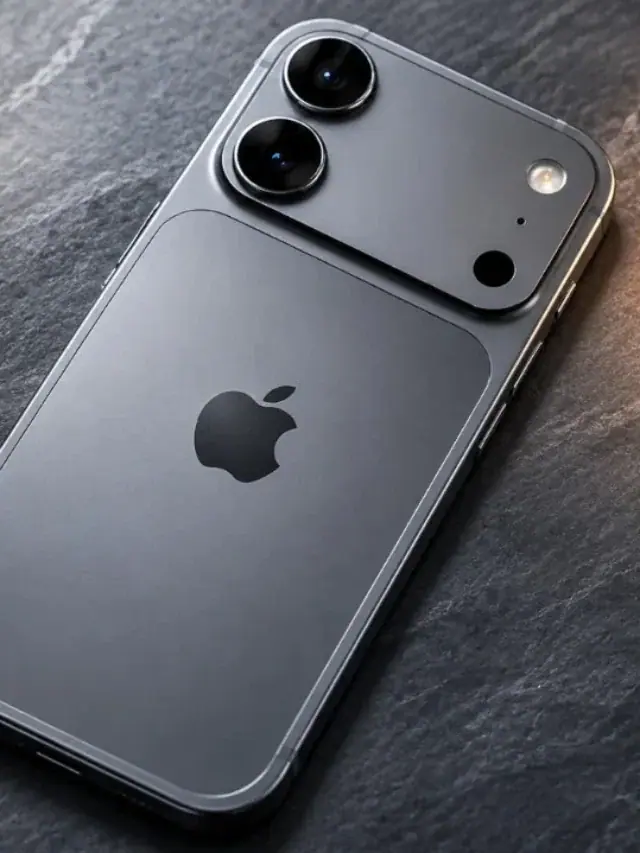
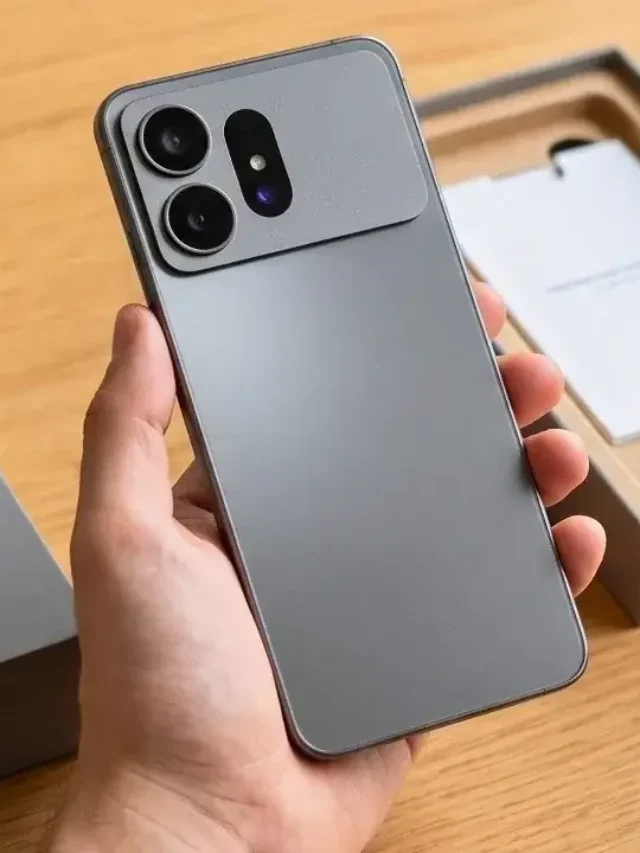
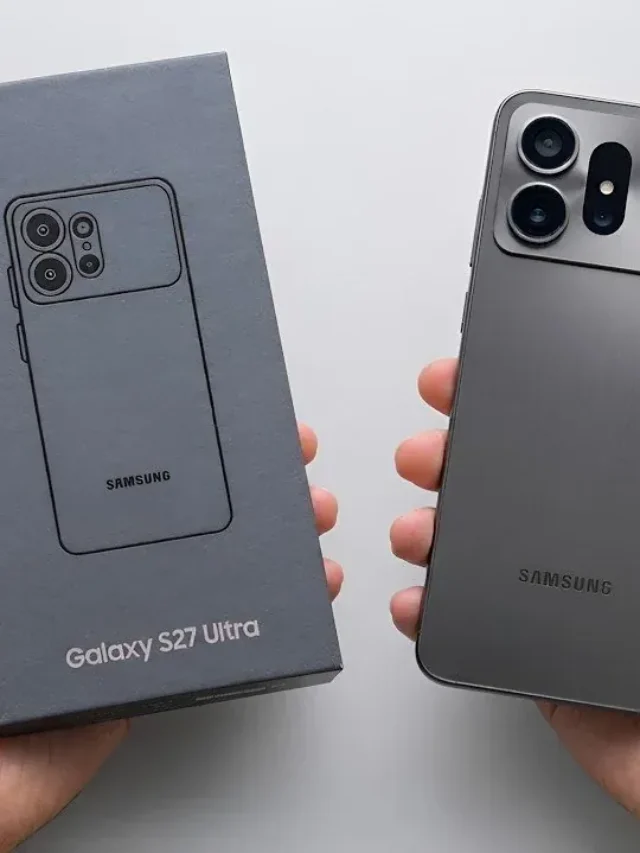
Early adopters paying $1,999 (see regional pricing table below) for Apple’s first foldable are confronting a terrifying iPhone Duo screen damage crisis right out of the box.
- Day-One Failures: Multiple owners report internal OLED panels snapping along the central crease after fewer than 20 folds.
- Eye-Watering Repair Bills: Out-of-warranty inner display replacements cost a staggering $999 in the US, equivalent to half the phone’s retail price.
- Supplier Finger-Pointing: Supply chain insiders allege Apple pressured internal hinge-plate manufacturer Fine M-Tec to delete a public statement denying component defects.
- DIY Parts Launched: Apple just added $499 inner OLED panels to its Self Service Repair Store, though full assembly swaps still run $999 before tool rentals.
Would you still risk unfolding a two-thousand-dollar flagship if every snap of the hinge carried a fifty-percent financial penalty?
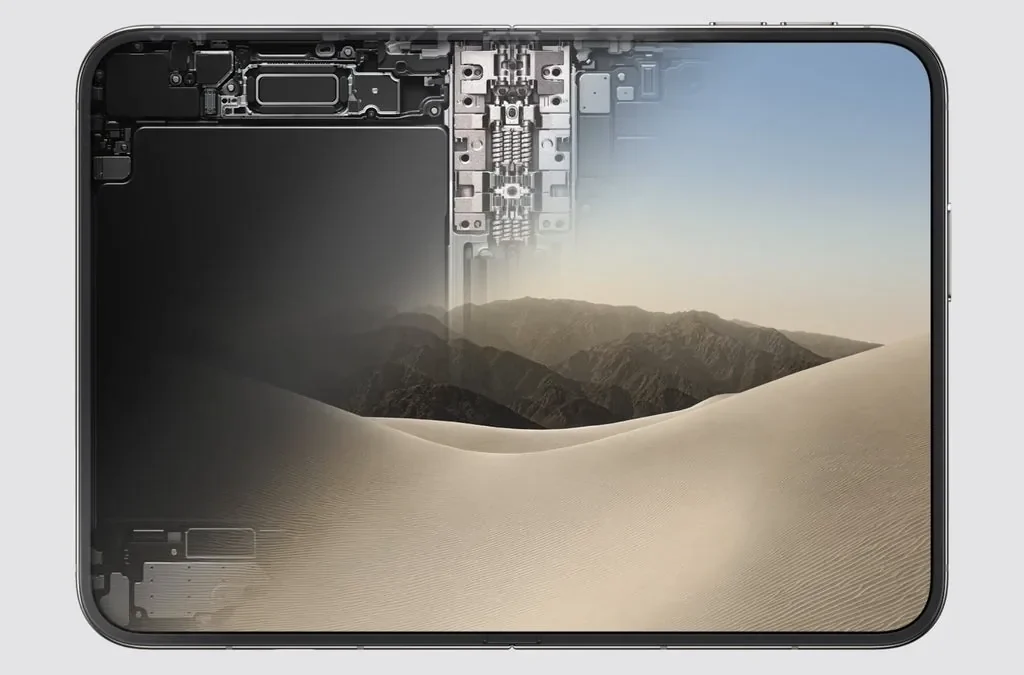
To understand why these failures are happening, look at how a folding display works under stress. Unlike rigid smartphone glass, flexible OLED panels rely on ultra-thin internal metal plates and custom adhesives that let layers glide past each other during every bend. If a microscopic tolerance slips inside that 100-component hinge mechanism, localized pressure concentrates directly onto the crease and fractures the delicate substrate.
Why iPhone Duo Screen Damage Strikes Within Hours
Apple officially unveiled its debut foldable at its Cupertino keynote on September 9, 2026, at 10:00 AM PT (1:00 PM ET / 5:00 PM GMT). Following pre-orders on October 16, retail shipments hit doorsteps globally on October 23, 2026. Within hours of unboxing, owners began flooding community forums with photos of a distinct white line glowing down the right side of the inner crease.
Dubbed “Crackgate” across social media, the defect does not require a drop or clumsy handling to trigger. Several buyers documented their 7.6-inch Super Retina XDR displays shattering after routine opening and closing cycles. Worse yet, some affected customers received brand-new replacement units from retail stores only to watch the second screen fracture in the exact same spot within 24 hours.
Apple acknowledged the issue on October 26, stating it was aware of inner display failures affecting a small number of units. While the company instructed affected owners to contact support for free replacements, it notably declined to offer any technical explanation. Meanwhile, independent stress tests conducted by reviewers pushed other units past 55,000 folds without structural failure, pointing strongly toward uneven manufacturing tolerances rather than universal design collapse.
Inside the Supply Chain Clash Over Faulty Hinge Plates
The mystery deepened this week following explosive reports from South Korean industry circles. Supply chain insiders indicate that the controversy centers on Fine M-Tec, the supplier responsible for the internal metal reinforcement plates that support the flexible OLED panel. These precision plates distribute mechanical tension across the 5.2 mm (0.21-inch) unfolded chassis every time the device bends.
On October 26, Fine M-Tec published an unusual corporate statement denying that its components caused recent product quality failures. Although the filing avoided naming Apple directly, analysts immediately connected the timing to the iPhone Duo screen damage fallout. By November 4, however, that statement vanished completely from Fine M-Tec’s website.
Industry sources claim Apple intervened directly, objecting to a component partner publicly deflecting blame while engineering teams investigated the root cause. Representatives from the supplier reportedly even reached out to regional trade reporters asking them to retract coverage of the deleted denial. Neither Cupertino nor the component maker has issued an official comment on the alleged gag order, leaving consumers in the dark about which serial batches carry defective hardware.
Brutal Out-of-Warranty Repair Costs and DIY Options
If your screen cracks outside of standard warranty coverage, the financial penalty is unprecedented in smartphone history. Without an active protection plan, Apple charges $999 to replace a damaged inner folding screen in the United States. That single repair equals exactly 50% of the base handset’s $1,999 retail cost.
By comparison, repairing the inner display assembly on a rival Galaxy Z Fold 8 Ultra costs $639, while a screen-only swap runs $479. Even damaging the smaller 5.4-inch outer cover screen on Apple’s foldable carries a $379 bill, more than double the $149 charged by competitors. If technicians classify catastrophic chassis impact under “other damage,” the out-of-warranty fee balloons to $1,499.
| Service or Component | Out-of-Warranty Cost (USD) |
|---|---|
| Inner Folding Display Replacement | $999 |
| Outer Cover Display Replacement | $379 |
| Inner Screen Cover Layer Swap | $49 |
| Other Accidental Damage | $1,499 |
| AppleCare+ Annual Plan | $199.99 / year |
| Inner Display (With AppleCare+) | $99 |
| DIY Inner OLED Panel Part | $499 (plus $49 tool rental) |
In a surprising move on November 18, Apple added genuine replacement parts to its Self Service Repair Store across North America and Europe. Handy owners can order a standalone inner OLED panel for $499, though complex repairs requiring the full display assembly still cost $999 before a $159.84 core return credit. Given the intricate adhesive layers and 100-part hinge architecture, attempting a home repair risks catastrophic failure for anyone lacking micro-soldering expertise.
Complete Hardware Breakdown: What You Get for Two Grand
Beyond the iPhone Duo screen damage headlines, the hardware underneath represents Apple’s most ambitious engineering leap in a decade. The device pairs a grade-5 titanium frame with a 3D-printed hinge cover and IP68 water resistance down to 6 meters (19.7 feet) for 30 minutes. Powering both screens is the 3nm A20 Pro chip, delivering a 20% faster 6-core CPU and 50% higher memory bandwidth than the previous A19 Pro.
| Hardware Specification | Official Technical Details |
|---|---|
| Processor | A20 Pro (6-core CPU, 7-core GPU, Dual 16-core Neural Engine, vapor chamber) |
| Inner Display | 7.6-inch Super Retina XDR OLED, 1878 x 2670 (430 ppi), 120Hz ProMotion, nano-texture, 3,000 nits peak |
| Outer Display | 5.4-inch Super Retina XDR OLED, 1398 x 2034 (460 ppi), 120Hz ProMotion, Ceramic Shield 2 |
| Rear Cameras | 48MP Fusion Main (f/1.6, sensor-shift OIS) + 48MP Fusion Ultra Wide (f/2.2, 120° FOV) |
| Front Cameras | 12MP Center Stage outer camera + hidden under-display FaceTime camera inside |
| Battery & Charging | Dual lithium-ion cells (44h outer / 31h inner video), 50% in 20 mins via 60W USB-C, 25W MagSafe/Qi2 |
| Dimensions (Unfolded) | 164.6 mm x 117.8 mm x 5.2 mm (6.48 x 4.64 x 0.21 inches) |
| Dimensions (Folded) | 84.1 mm x 117.8 mm x 11.3 mm (3.31 x 4.64 x 0.44 inches) |
| Weight | 254 grams (8.96 ounces) |
| Biometrics & SIM | Side-button Touch ID (no Face ID), Dual eSIM only (no physical SIM tray) |
| Storage & Colors | 256GB, 512GB, 1TB, 2TB in Star White and Night Sky |
| Starting Price | $1,999 (256GB base model) |
Global Pricing Table
| Region / Currency | Starting Retail Price (256GB) |
|---|---|
| United States (USD) | $1,999 (excludes local state tax) |
| India (INR) | ₹2,99,900 (includes GST) |
| Europe / Germany (EUR) | €2,299 (includes VAT) |
| United Kingdom (GBP) | £1,999 (includes VAT) |
The Bigger Picture
Apple spent years watching Samsung, Google, and Chinese rivals absorb the brutal growing pains of early foldable hardware before entering the arena. By pricing its debut model at $1,999 while marketing a nearly invisible crease, Cupertino set sky-high expectations for flawless first-generation reliability. These widespread cracking reports hand immediate ammunition to competitors like Samsung, whose Galaxy Z Fold 8 not only undercuts Apple on retail pricing but costs roughly half as much to repair. If Apple fails to transparently isolate the defective production batches soon, mainstream consumers may conclude that foldable phones remain fragile luxury experiments rather than dependable daily drivers.
Unfiltered Opinion
Buying any first-generation Apple hardware requires a high tolerance for early teething issues, and the iPhone Duo proves that rule with painful precision. When it works, the nano-texture 7.6-inch canvas and 5.2 mm titanium frame feel genuinely futuristic. However, spending two grand on a device whose inner screen can self-destruct within twenty folds—and carries a $999 repair bill if Apple blames accidental pressure—is a gamble few buyers should take. Unless you are willing to budget an extra $199.99 a year for AppleCare+ from day one, wait for the second-generation model next fall.
- K.K., Founder of TechKomo