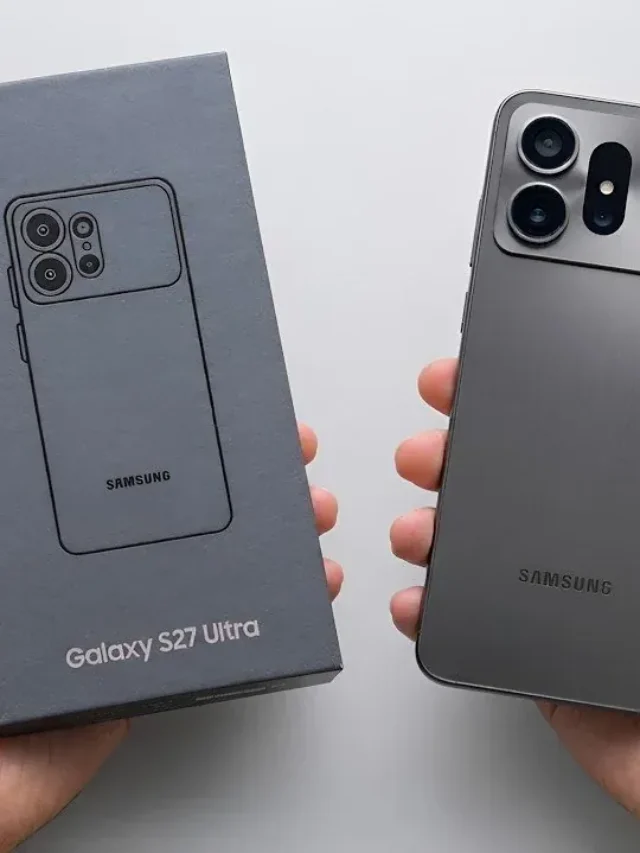
Fresh Galaxy S27 Ultra design leaks reveal that Samsung is preparing to abandon its iconic floating camera rings for a polarizing horizontal camera bar that already has diehard fans divided.
- Radical Rear Overhaul: Early CAD schematics and case molds show a wide, full-width horizontal camera housing replacing the clean individual lens rings used since 2022.
- Triple-Camera Restructuring: Samsung is reportedly dropping its dedicated 10MP 3x telephoto sensor in favor of a streamlined 200MP, 50MP, and 50MP triple-lens array.
- First Battery Capacity Jump in Years: Regulatory certification listings point to a 5,700mAh silicon-carbon battery, marking a 14% capacity increase over the Galaxy S26 Ultra.
- 2nm Silicon & Magnetic Charging: Leaked hardware sheets highlight the 2nm Snapdragon 8 Elite Extreme Gen 6 chip alongside native Qi2 magnetic wireless charging.

TechKomo Disclaimer: The details discussed below are based on early supply chain leaks, regulatory filings, and industry rumors. Official specifications and final aesthetics may vary prior to Samsung’s official announcement.
Would you still pay over $1,300 for Samsung’s ultimate flagship if its signature minimalist backplate suddenly looked like a mid-range phone?
To understand why these hardware shifts matter, we need to decode three terms dominating recent supply chain chatter. LOFIC (Lateral Overflow Integration Capacitor) prevents bright highlights from blowing out in high-contrast photos by storing excess light charge inside each pixel. Meanwhile, silicon-carbon battery chemistry packs significantly more energy into the exact same physical footprint, while Polar ID uses polarized light reflections to deliver secure 3D facial recognition without bulky hardware cutouts.
Why the Galaxy S27 Ultra Design Leaks Sparked Instant Backlash
For four straight generations, Samsung separated its flagship devices through clean, unencumbered glass backs with individual metal camera rings. However, newly surfaced accessory molds and schematic sketches indicate a dramatic pivot toward a wide rectangular camera island spanning the upper rear chassis. Within this raised housing, two primary lenses sit vertically stacked on the left while a third sensor and LED flash occupy the right side.
Consequently, online tech communities have reacted with sharp skepticism toward this aesthetic shift. Many longtime enthusiasts argue the broad visor looks uncomfortably similar to rival flagships and budget-tier Android handsets. Furthermore, supply chain insiders indicate that Samsung is applying this exact same camera bar silhouette to the rumored 6.47-inch Galaxy S27 Pro to unify its upcoming lineup.
Ergonomics, Dimensions, and Frame Refinements
Despite the polarizing camera housing, the overall footprint remains remarkably familiar for power users. Prototype measurements point to dimensions of 163.8 x 78.3 x 7.9mm (6.45 x 3.08 x 0.31 inches), preserving the slim profile introduced on the S26 Ultra. Additionally, component engineers are reportedly shaving several grams off the chassis, bringing total weight below the previous model’s 214g (7.55 oz).
On the bottom edge, the built-in S Pen slot and primary speaker grille remain anchored on the left side. Samsung is also expected to reinforce the front and back panels with Corning Gorilla Glass Armor 2 alongside an IP68 dust and water resistance rating. More importantly, leaked case outlines reveal a circular internal magnet array, strongly signaling that native Qi2 magnetic wireless charging will finally arrive.
The Controversial Shift From Four Cameras to Three
Beyond the exterior visor, the most surprising revelation inside these Galaxy S27 Ultra design leaks involves the optics. Samsung is reportedly eliminating its long-standing 10MP 3x optical telephoto camera, condensing the rear array into three high-resolution sensors. Instead of relying on four separate lenses, the company plans to use advanced in-sensor cropping from its primary sensor to bridge intermediate focal lengths.
At the center of this restructured setup sits a next-generation 200MP Samsung ISOCELL HP6 main sensor. By integrating LOFIC architecture, this sensor aims to capture cinematic dynamic range in harsh lighting without clipping bright skies. Alongside it, Samsung is pairing an upgraded 50MP ultrawide lens with a 50MP periscope telephoto camera capable of 5x optical zoom.
Selfie Camera and Biometric Upgrades
Front-facing hardware is also scheduled for its first resolution bump since the S23 generation. Tipsters close to sensor suppliers report that Samsung is replacing the aging 12MP front shooter with a sharper 16MP selfie camera. This upgrade promises noticeably cleaner 4K 60fps video calls and improved low-light facial detail.
Equally intriguing is the rumored debut of Polar ID biometric authentication. Rather than adding a wide pill-shaped cutout to the screen, this system analyzes polarized light patterns reflected off human skin. As a result, users could gain banking-grade 3D face unlock speed alongside the under-display ultrasonic fingerprint reader.
Next-Gen M16 OLED Display and 2nm Silicon Power
While the rear casing sparks debate, the front panel appears poised to set new industry benchmarks. The device will feature a 6.9-inch QHD+ (1440 x 3120 pixels) Dynamic AMOLED 2X display built on Samsung’s next-generation M16 OLED material set. Furthermore, engineers are addressing viewing-angle color shifts while introducing a Split-Screen Privacy Display mode that shields sensitive apps from side glances.
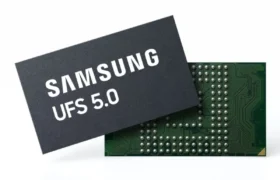
Under the hood, Qualcomm’s 2nm Snapdragon 8 Elite Extreme Gen 6 chipset is tipped to power all global variants of the Ultra model. Early architectural leaks suggest dual prime Oryon CPU cores clocked up to 5.0GHz, paired with an Adreno 850 GPU. Moreover, pairing this silicon with 12GB or 16GB of LPDDR6 RAM and UFS 5.0 storage will dramatically accelerate on-device Galaxy AI processing under Android 17 and One UI 9.5.
Silicon-Carbon Battery Breakthrough
Battery capacity has remained stagnant at 5,000mAh across six consecutive Ultra generations. However, early 3C regulatory certification filings point directly to a 5,700mAh rated cell for the S27 Ultra. Transitioning to high-density silicon-carbon anode chemistry enables this 14% capacity jump without thickening the chassis.
Charging speeds are also seeing modest upward refinement. Wired power delivery is expected to sit between 60W and 65W, shaving valuable minutes off full recharge cycles. Combined with 25W Qi2 magnetic wireless charging, the handset finally addresses two long-standing user complaints.
Rumored Samsung Galaxy S27 Ultra Specifications
| Specification | Rumored Hardware Details |
|---|---|
| Processor | Qualcomm Snapdragon 8 Elite Extreme Gen 6 (2nm, Octa-core up to 5.0GHz) |
| Display | 6.9-inch QHD+ (1440 x 3120) M16 Dynamic AMOLED 2X, 1Hz–120Hz LTPO, Split-Screen Privacy Display |
| Rear Cameras | 200MP ISOCELL HP6 Main (LOFIC) + 50MP Ultrawide + 50MP Periscope Telephoto (5x optical zoom) |
| Front Camera | 16MP wide-angle sensor with 4K 60fps video and Polar ID biometric support |
| Battery & Charging | 5,700mAh Silicon-Carbon cell, 60W–65W wired charging, 25W Qi2 magnetic wireless |
| Memory & Storage | 12GB / 16GB LPDDR6 RAM with 256GB / 512GB / 1TB UFS 5.0 storage |
| Dimensions & Build | 163.8 x 78.3 x 7.9mm (6.45 x 3.08 x 0.31 in), Gorilla Glass Armor 2, IP68 rating |
| Stylus & Biometrics | Integrated S Pen, Ultrasonic in-display fingerprint sensor, Polar ID 3D face unlock |
| Software | Android 17 with One UI 9.5 (7 years of OS and security updates) |
| Expected Launch | January or February 2027 (Unpacked typically at 10:00 AM PT / 1:00 PM ET / 6:00 PM GMT) |
| Expected Starting Price | $1,299.99 – $1,399.99 (see regional pricing table below) |
Global Pricing Expectations
Given rising component costs for 2nm wafers and LPDDR6 memory modules, analysts expect Samsung to price the base 12GB + 256GB model between $1,299.99 and $1,399.99. Following historical Galaxy S-series launch patterns, buyers across major global territories can anticipate regional retail pricing aligned closely with the figures below.
| Region & Currency | Estimated Base Price (12GB / 256GB) |
|---|---|
| United States (USD) | $1,299.99 – $1,399.99 |
| India (INR) | ₹1,39,999 – ₹1,49,999 |
| European Union (EUR) | €1,469 – €1,549 |
| United Kingdom (GBP) | £1,279 – £1,359 |
The Bigger Picture
Stepping back from the immediate aesthetic controversy, these Galaxy S27 Ultra design leaks expose a calculated engineering trade-off. Smartphone makers have hit physical volume limits inside sub-8mm flagships, especially when housing an internal stylus alongside magnetic charging coils. By consolidating the rear optics into a single horizontal bar, Samsung frees critical internal board space for a larger 5,700mAh silicon-carbon battery and superior thermal dissipation. This structural pivot puts immediate pressure on rival manufacturers, proving that internal battery density and native magnetic ecosystems now outweigh legacy exterior symmetry.
Unfiltered Opinion
Samsung’s rumored horizontal camera bar is undeniably jarring at first glance, and critics have every right to miss the sculptural simplicity of individual floating rings. However, judging a flagship purely on early unpainted CAD renders misses the real story unfolding beneath the glass. If sacrificing a rarely used 3x telephoto lens and adopting a wider camera visor unlocks a genuine 5,700mAh battery, LOFIC main sensor optics, and native Qi2 magnets without adding bulk, that is a trade worth making every single time. Function must always beat nostalgia in a $1,300+ pocket computer—provided Samsung finishes that camera bar with true flagship craftsmanship rather than cheap plastic trim.
- K.K., Founder of TechKomo