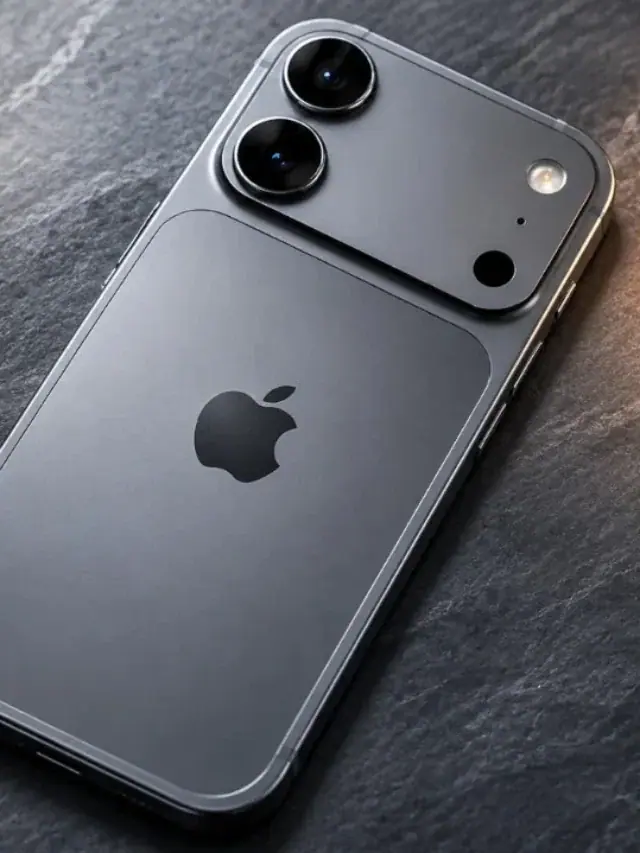
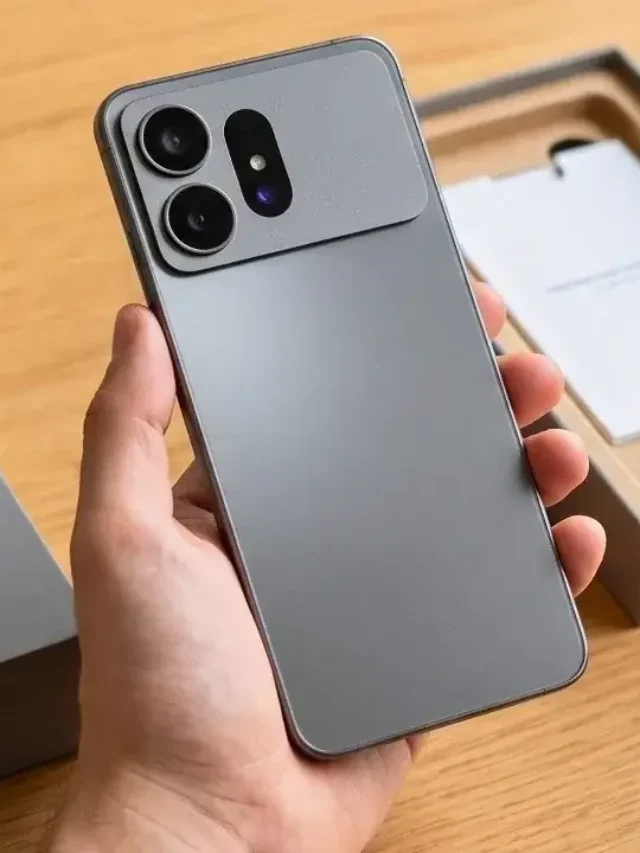
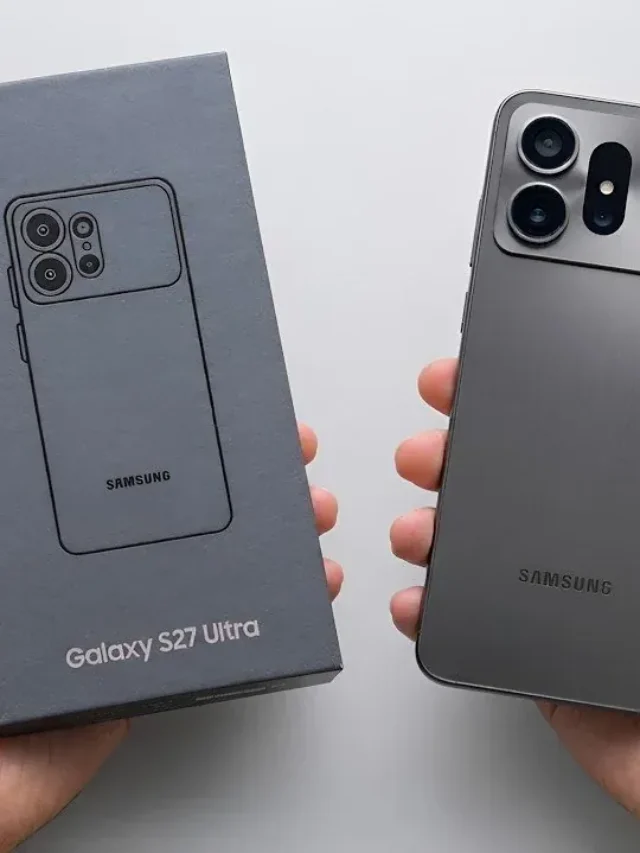
Apple finally entered the folding phone arena this fall, and the iPhone Duo vs Pixel 11 showdown reveals a shocking $1,999 (see regional pricing table below) hardware compromise that nobody saw coming. While Cupertino engineered a jaw-dropping crease-free titanium book-style foldable, Google quietly undercut it by $100 (see regional pricing table below) with superior zoom optics and a brighter cover screen. Buyers rushing to preorder either flagship need to look past the glossy keynote demos before spending nearly two thousand dollars.
Quick Highlights
- Raw Silicon Dominance: Apple’s 2nm A20 Pro chip hits 3,085,164 on AnTuTu, outscoring Google’s Tensor G6 (1,951,408) by roughly 58 percent.
- The Optical Zoom Catch: Despite costing $1,999 (see regional pricing table below), the iPhone Duo completely omits a dedicated telephoto zoom lens, whereas the Pixel 11 Pro Fold packs a 5x optical telephoto camera.
- Display & Brightness Split: Google offers a larger 8.0-inch inner canvas and a blinding 3,600-nit cover screen, while Apple counters with a glare-killing nano-texture matte 7.6-inch inner OLED.
- Portability Edge: Google’s eighth-generation foldable engineering trims weight down to 239g (8.43 oz) and 10.1mm (0.40 in) folded, beating Apple’s 254g (8.96 oz) and 11.3mm (0.44 in) titanium chassis.

Would you willingly give up true optical telephoto zoom and pay $100 extra just to run iOS on a folding screen?
To understand why these two panels look so different outdoors, it helps to decode Apple’s nano-texture glass. Instead of applying a standard glossy coating that reflects overhead lights, Apple micro-etches the inner polymer surface at a nanometer scale to scatter glare while keeping text razor-sharp. Meanwhile, Google relies on LTPO Super Actua Flex technology, dynamically dropping refresh rates from 120Hz down to 1Hz to preserve battery life during static reading.
Titanium Craftsmanship vs. Featherweight Engineering
Apple unveiled the iPhone Duo on September 9, 2026, at 10:00 AM PT (1:00 PM ET / 5:00 PM GMT), marking its boldest hardware departure in over a decade. Built around a mirror-polished Grade 5 titanium frame and a 3D-printed titanium hinge cover, the device feels remarkably dense and rigid in daily handling. Inside that hinge, over 100 precision-milled components support the center of the folding display to minimize the dreaded center crease. Furthermore, Apple achieved full IP68 dust and water resistance, allowing the chassis to survive submersion up to 6 meters (19.7 feet) for 30 minutes.
By comparison, Google launched the Pixel 11 Pro Fold on August 12, 2026, at 10:00 AM PT (1:00 PM ET / 5:00 PM GMT) with a clear focus on pocket ergonomics. Measuring just 5.0mm (0.20 in) thin when unfolded and 10.1mm (0.40 in) closed, Google’s flagship slips into jeans far easier than Apple’s 11.3mm (0.44 in) folded profile. Moreover, Google shaved total mass down to 239g (8.43 oz) using an ultra-durable composite backplate, making the 254g (8.96 oz) iPhone noticeably heavier during long one-handed reading sessions.
Biometrics and Everyday Ergonomics
Curiously, both tech giants settled on side-mounted fingerprint sensors rather than complex under-display face scanners for their foldables. Apple revived Touch ID inside the power button because slimming the 5.2mm (0.20 in) unfolded frame left zero room for TrueDepth Face ID sensors. Similarly, Google pairs a capacitive power-button fingerprint reader with camera-based Face Unlock on both screens. However, Apple dropped physical SIM trays worldwide in favor of dual eSIM support, whereas Google retains a physical nano-SIM slot alongside eSIM in most global markets.
Dual Displays Built for Different Habits
Open both devices side by side, and their contrasting screen philosophies immediately stand out. In the iPhone Duo vs Pixel 11 display battle, Apple prioritized aspect-ratio consistency so apps never feel stretched or awkward when switching screens. Closed, you get a compact 5.4-inch Super Retina XDR OLED (1398 x 2034 pixels) that operates easily with one thumb. Unfolded, it expands into a 7.6-inch inner panel (1878 x 2670 pixels, 430 ppi) with a 1.41:1 aspect ratio and an invisible under-display FaceTime camera.
Conversely, Google designed the Pixel 11 Pro Fold to behave like a conventional slab phone until you open it. Its 6.5-inch Super Actua OLED cover screen (1080 x 2342 pixels, 19.5:9 aspect ratio) hits an astonishing 3,600 nits of peak brightness, outshining Apple’s 3,000-nit outer panel under harsh midday sunlight. Inside, Google stretches the canvas to a square 8.0-inch display (2076 x 2152 pixels, 374 ppi) protected by Ultra Thin Glass. Additionally, Apple includes Apple Pencil (USB-C) support for sketching across either screen, a productivity perk Google still refuses to match.
Silicon Benchmarks: A20 Pro Crushes Tensor G6
Under the hood, raw processing power separates these two foldables by a wide margin. Apple equipped the iPhone Duo with its 2nm A20 Pro chip, pairing two 4.93GHz Everest performance cores with four 2.64GHz Sawtooth efficiency cores and 12GB of LPDDR5X RAM. Independent benchmark labs recorded an AnTuTu v10 score of 3,085,164 alongside a Geekbench 6 single-core result of 4,710. Thanks to an internal vapor chamber and Apple’s new C2 5G modem, sustained 3D gaming and iOS 27 Split View multitasking run without thermal throttling.
Meanwhile, Google powered the Pixel 11 Pro Fold with its 2nm Tensor G6 processor, 16GB of RAM, and a Titan M3 security coprocessor. While Android 17 and on-device Gemini Intelligence feel fluid in daily use, raw silicon numbers tell a sobering story. Testing shows the Tensor G6 reaches 1,951,408 on AnTuTu, trailing Apple’s A20 Pro by roughly 58 percent in overall compute throughput. Therefore, mobile video editors and heavy gamers will notice faster export times and higher frame rates on Apple’s hardware.
The $1,999 Camera Compromise Nobody Expected
Photography is where the iPhone Duo vs Pixel 11 comparison takes its sharpest, most controversial turn. Despite charging $1,999 (see regional pricing table below), Apple fitted the iPhone Duo with only two rear sensors: a 48MP Fusion Main lens (f/1.6, 1/1.56-inch sensor, optical stabilization) and a 48MP Fusion Ultra Wide camera. Apple completely omitted a dedicated telephoto camera, forcing buyers to rely on 2x sensor-crop zoom and 10x digital magnification. Even Apple’s $1,299 (see regional pricing table below) iPhone 18 Pro Max delivers superior optical reach.
In contrast, Google equipped the Pixel 11 Pro Fold with a versatile triple-camera array engineered for distance and low light. Alongside a revamped 48MP wide main sensor (f/1.7, delivering 56 percent better light sensitivity) and a 10.5MP ultrawide lens, Google included a dedicated 10.8MP telephoto camera with 5x optical zoom and 30x Super Res Zoom. Consequently, concert shots, wildlife portraits, and distant landmarks look dramatically cleaner on Google’s foldable than on Apple’s pricier flagship.
Battery Endurance and Charging Speeds
Packing high-capacity cells inside 5mm folding halves remains an engineering tightrope, yet both brands delivered all-day endurance. Apple engineered a custom 4,883 mAh dual-cell battery system inside the iPhone Duo, achieving up to 44 hours of video playback on the cover screen and 31 hours on the inner OLED. Better yet, Apple supports 60W wired charging that refills 50 percent of the battery in 20 minutes, plus 25W MagSafe and Qi2 wireless charging.
Similarly, Google squeezed a 4,806 mAh battery into the Pixel 11 Pro Fold, easily clearing 24 hours of mixed multitasking in real-world testing. However, Google caps wired charging at 30W, taking 30 minutes to reach 50 percent capacity and 90 minutes for a full top-up. On the bright side, Google added 25W Pixelsnap magnetic wireless charging and bypass charging, which routes wall power directly to the motherboard during heavy gaming to reduce battery heat.
Complete Hardware Specifications Breakdown
| Specification | Apple iPhone Duo vs. Google Pixel 11 Pro Fold |
|---|---|
| Processor | iPhone Duo: Apple A20 Pro (2nm, hexa-core up to 4.93GHz) / Pixel 11 Pro Fold: Google Tensor G6 (2nm, up to 4.11GHz) + Titan M3 |
| RAM & Storage | iPhone Duo: 12GB LPDDR5X RAM; 256GB / 512GB / 1TB / 2TB / Pixel 11 Pro Fold: 16GB RAM; 256GB / 512GB / 1TB |
| Inner Display | iPhone Duo: 7.6-inch Super Retina XDR OLED (1878 x 2670, 1–120Hz, 3,000 nits, nano-texture matte) / Pixel 11 Pro Fold: 8.0-inch Super Actua Flex OLED (2076 x 2152, 1–120Hz, 3,000 nits) |
| Cover Display | iPhone Duo: 5.4-inch OLED (1398 x 2034, 1–120Hz, 3,000 nits) / Pixel 11 Pro Fold: 6.5-inch OLED (1080 x 2342, 1–120Hz, 3,600 nits) |
| Rear Cameras | iPhone Duo: 48MP Main (f/1.6, OIS) + 48MP Ultra Wide (No telephoto) / Pixel 11 Pro Fold: 48MP Main (f/1.7, OIS) + 10.5MP Ultra Wide + 10.8MP 5x Optical Telephoto |
| Front Cameras | iPhone Duo: 12MP outer + under-display inner camera / Pixel 11 Pro Fold: 10MP outer + 10MP inner punch-hole cameras |
| Battery & Charging | iPhone Duo: 4,883 mAh; 60W wired, 25W MagSafe/Qi2 / Pixel 11 Pro Fold: 4,806 mAh; 30W wired, 25W Pixelsnap/Qi2 |
| Dimensions & Weight | iPhone Duo: 11.3mm (0.44 in) folded, 5.2mm (0.20 in) open; 254g (8.96 oz) / Pixel 11 Pro Fold: 10.1mm (0.40 in) folded, 5.0mm (0.20 in) open; 239g (8.43 oz) |
| Durability & OS | iPhone Duo: IP68, Grade 5 Titanium, iOS 27 (7 yrs updates) / Pixel 11 Pro Fold: IP68, Composite & Metal, Android 17 (7 yrs updates) |
| Base Price (USD) | iPhone Duo: $1,999 (see regional pricing table below) / Pixel 11 Pro Fold: $1,899 (see regional pricing table below) |
Global Pricing Table
| Region & Currency | Official Starting Retail Price |
|---|---|
| United States (USD) | iPhone Duo (256GB): $1,999 / Pixel 11 Pro Fold (256GB): $1,899 |
| India (INR) | iPhone Duo (256GB): ₹2,99,900 / Pixel 11 Pro Fold (512GB base): ₹1,86,999 |
| Europe (EUR) | iPhone Duo (256GB): €2,299 / Pixel 11 Pro Fold (256GB): €1,999 |
| United Kingdom (GBP) | iPhone Duo (256GB): £1,999 / Pixel 11 Pro Fold (256GB): £1,799 |
The Bigger Picture
Apple’s long-awaited arrival in the foldable category permanently validates book-style phones as mainstream flagship hardware rather than niche tech experiments. However, by pricing the iPhone Duo at $1,999 (see regional pricing table below) while stripping away optical zoom, Apple has left a massive opening for Android rivals. Google, Samsung, and Honor can now aggressively target camera enthusiasts and value-conscious power users with thinner hardware, larger batteries, and full periscope zoom lenses for hundreds of dollars less.
Unfiltered Opinion
Choosing between these two ultra-premium foldables comes down to what you refuse to compromise on. If you live inside Apple’s ecosystem, crave A20 Pro gaming speed, want Apple Pencil note-taking, and love a glare-free matte inner display, the iPhone Duo delivers remarkable first-generation polish—provided you buy AppleCare+ and accept mediocre zoom. Still, for most pragmatic buyers, the Pixel 11 Pro Fold is the smarter, more complete daily driver thanks to its lighter 239g (8.43 oz) frame, 5x optical telephoto lens, brighter 6.5-inch cover screen, and far fairer global pricing.
- K.K., Founder of TechKomo