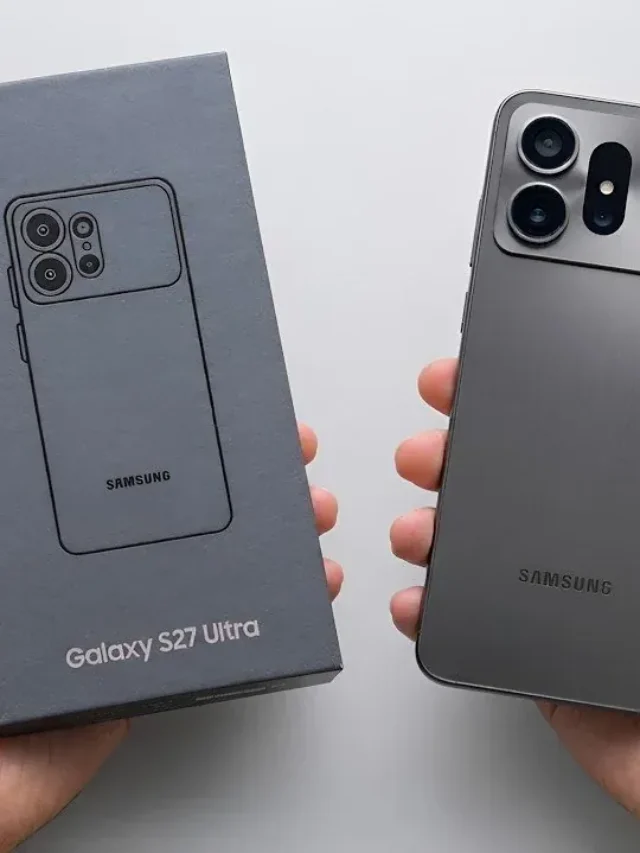
Samsung has engineered a controversial silicon split for its upcoming flagship lineup, exposing a massive Galaxy S27 Pro chip problem that leaves buyers paying Ultra-tier money for second-best hardware.
- The Silicon Split: Trade database filings confirm the Galaxy S27 Pro uses the standard Snapdragon 8 Elite Gen 6, while only the Galaxy S27 Ultra gets the full-fat Extreme edition.
- The Exynos Irony: Internal lab tests indicate Samsung’s own 2nm Exynos 2700 actually outperforms Qualcomm’s standard chip by 9.5 percent in multi-core workloads, yet Samsung is withholding it from the Pro tier.
- Steep Pricing: Early supply chain estimates peg the Galaxy S27 Pro at $1,299 (approx. ₹1,08,000 / €1,190 / £1,020), creating an awkward value gap right below the $1,399 (approx. ₹1,16,500 / €1,280 / £1,100) Ultra.
- Expected Launch Window: Samsung is projected to unveil the four-device lineup in January or February 2027, likely starting at 10:00 AM PT / 1:00 PM ET / 6:00 PM GMT.
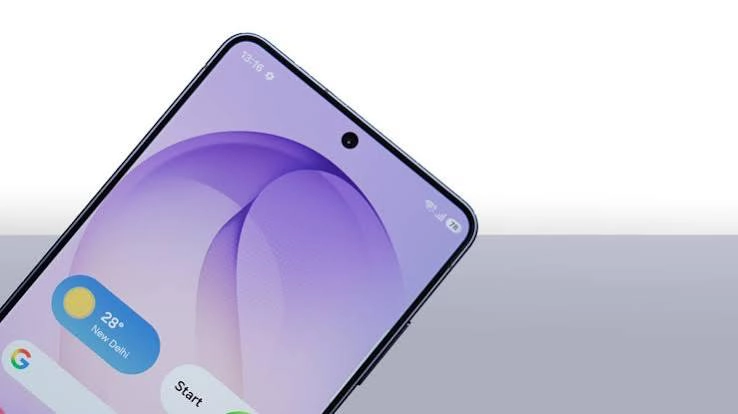
Would you willingly spend over $1,200 on a brand-new “Pro” flagship knowing its processor was deliberately capped at the factory?
TechKomo Disclaimer: The details discussed below are based on early industry leaks, trade database filings, and supply chain rumors. Official specifications and pricing may vary upon announcement.
To understand this controversy, you must look at how modern mobile processors are “binned,” or sorted by quality during manufacturing. Chipmakers test identical silicon wafers and assign the highest-performing dies to an “Extreme” tier, while slightly slower units are sold as standard chips at a lower wholesale cost. For everyday buyers, this means two phones carrying the same generation name can deliver noticeably different sustained gaming speeds and thermal efficiency.
Uncovering the Galaxy S27 Pro Chip Problem in Trade Filings
Recent international import-export records have blown the lid off Samsung’s 2027 processor strategy. Listings for the European dual-SIM variants—specifically model SM-S957B/DS for the Galaxy S27 Pro and SM-S958B/DS for the Galaxy S27 Ultra—confirm a strict three-tier hardware hierarchy. Rather than unifying its top two flagships under identical silicon, Samsung has reserved Qualcomm’s top-bin SM8975 chip, officially designated as the Snapdragon 8 Elite Extreme Gen 6, exclusively for the Ultra.
Meanwhile, the new Galaxy S27 Pro is restricted to the base SM8950, known as the Snapdragon 8 Elite Gen 6. Industry insiders indicate this creates a major Galaxy S27 Pro chip problem because the device is marketed as a compact, no-compromise alternative to the massive 6.9-inch (175.3 mm) Ultra. Buyers choosing the more pocketable 6.5-inch (165.1 mm) Pro form factor will effectively receive the exact same baseline silicon found inside the entry-level Galaxy S27 in North America.
Why Samsung Rejected Its Faster Exynos 2700 Silicon
The situation grows even more perplexing when examining Samsung Foundry’s internal progress. Built on a second-generation 2nm process, the in-house Exynos 2700 entered mass production in October 2026 with aggressive performance targets. Supply chain leaks reveal that Samsung’s internal benchmarks show the Exynos 2700 beating the standard Snapdragon chip by 9.5 percent in multi-core CPU tasks and running on-device AI models 18 percent faster.
Despite these impressive lab numbers, tipsters report that Samsung refuses to put the Exynos 2700 inside the Galaxy S27 Pro or Ultra even in its home market of South Korea. Instead, the Exynos 2700 is relegated to the standard Galaxy S27 and Galaxy S27+ across Europe and select Asian markets like India. Samsung executives reportedly fear consumer backlash if a $1,299 (approx. ₹1,08,000 / €1,190 / £1,020) “Pro” phone carries an Exynos badge, forcing them to buy Qualcomm’s cheaper standard chip to protect brand perception while preserving profit margins.
Rumored Galaxy S27 Pro vs. Ultra Specifications
While Samsung has yet to confirm any hardware details, leaked logistics manifests and certification filings paint a clear picture of how the lineup separates its tiers. Both top models standardize on 12GB of LPDDR6 RAM and 256GB of UFS 5.1 storage at the base level, though the Ultra scales higher.
| Specification | Galaxy S27 Pro (Leaked) | Galaxy S27 Ultra (Leaked) |
|---|---|---|
| Model Number (Global) | SM-S957B/DS | SM-S958B/DS |
| Processor | Snapdragon 8 Elite Gen 6 (SM8950) | Snapdragon 8 Elite Extreme Gen 6 (SM8975) |
| Process Node | 2nm | 2nm |
| Display | 6.5-inch (165.1 mm) 120Hz AMOLED with Privacy Tech | 6.9-inch (175.3 mm) QHD+ 120Hz AMOLED |
| Battery Capacity | 5,000mAh to 5,500mAh | 5,700mAh |
| Camera System | 200MP Multi-Camera Array (Horizontal Bar) | 200MP Triple/Quad Camera Array |
| S Pen Support | No | Yes (Built-in) |
| Starting Price (Est.) | $1,299 (approx. ₹1,08,000 / €1,190 / £1,020) | $1,399 (approx. ₹1,16,500 / €1,280 / £1,100) |
The $100 Pricing Trap That Hurts Early Adopters
Pricing strategy sits at the very heart of this Galaxy S27 Pro chip problem. Supply chain leaks suggest Samsung will introduce the Pro tier at $1,299 (approx. ₹1,08,000 / €1,190 / £1,020) to bridge the gap between the Plus and Ultra variants. However, with the Galaxy S27 Ultra rumored to retail at $1,399 (approx. ₹1,16,500 / €1,280 / £1,100), the price difference shrinks to a mere $100 (approx. ₹8,300 / €92 / £79).
For that modest $100 premium, Ultra buyers unlock the binned Extreme processor, a larger 6.9-inch (175.3 mm) QHD+ screen, a bigger 5,700mAh battery, and integrated S Pen functionality. Furthermore, early leaks indicate the Pro model adopts a redesigned horizontal camera bar and new Privacy Display technology, yet rising component costs have forced Samsung to keep camera sensor upgrades minimal. Consequently, the Pro model risks feeling like an overpriced middle child rather than a true flagship breakthrough.
The Bigger Picture
Samsung’s rigid component segmentation puts immense pressure on the broader Android flagship market, directly mirroring Apple’s long-standing tactic of separating standard and Pro silicon. However, unlike Apple, which gives its compact Pro iPhone the exact same chip as the larger Pro Max, Samsung is actively penalizing buyers who prefer a smaller 6.5-inch (165.1 mm) chassis. Rivals like OnePlus, Xiaomi, and Google now have a massive opening to undercut Samsung by offering unthrottled top-tier silicon in more compact, aggressively priced flagships throughout 2027.
Samsung is playing a dangerous psychological game with its most loyal smartphone buyers. Calling a device “Pro” while equipping it with a lower-tier processor than the Ultra—especially when Samsung’s own Exynos 2700 reportedly beats that standard chip in raw multi-core benchmarks—feels like a textbook case of corporate penny-pinching. Unless Samsung widens the price gap by at least $200 (approx. ₹16,600 / €183 / £158) before its early 2027 Unpacked event, skipping the Galaxy S27 Pro and spending the extra $100 for the Ultra is the only logical financial move.
- K.K., Founder of TechKomo