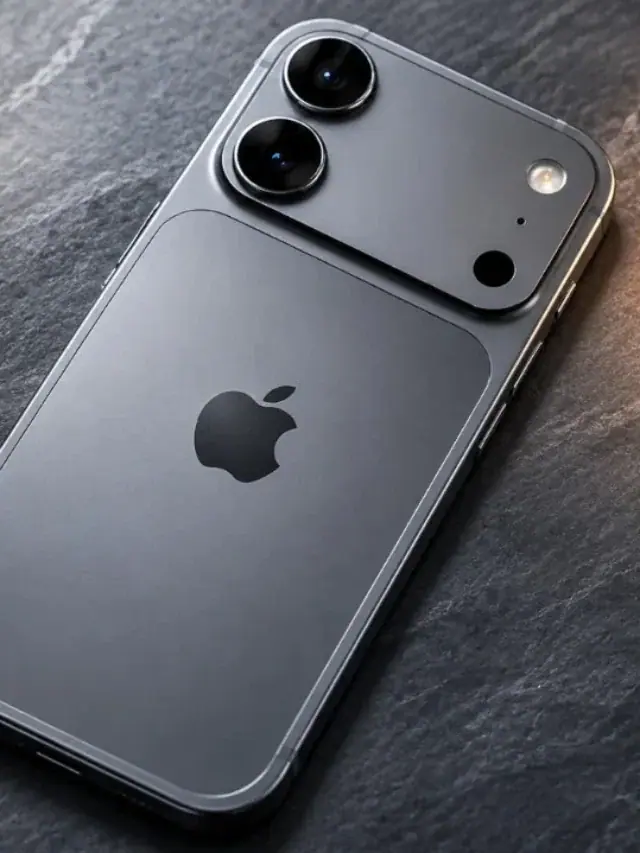
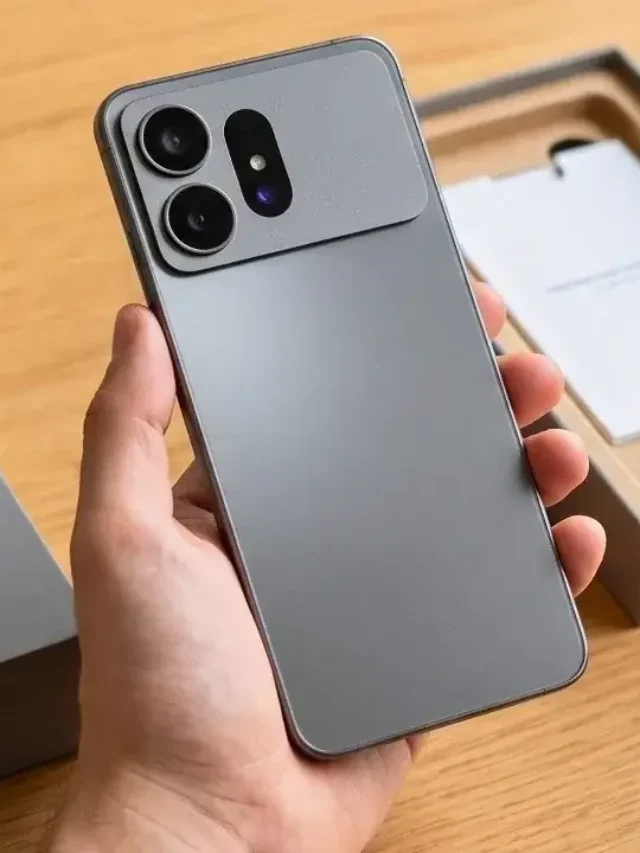
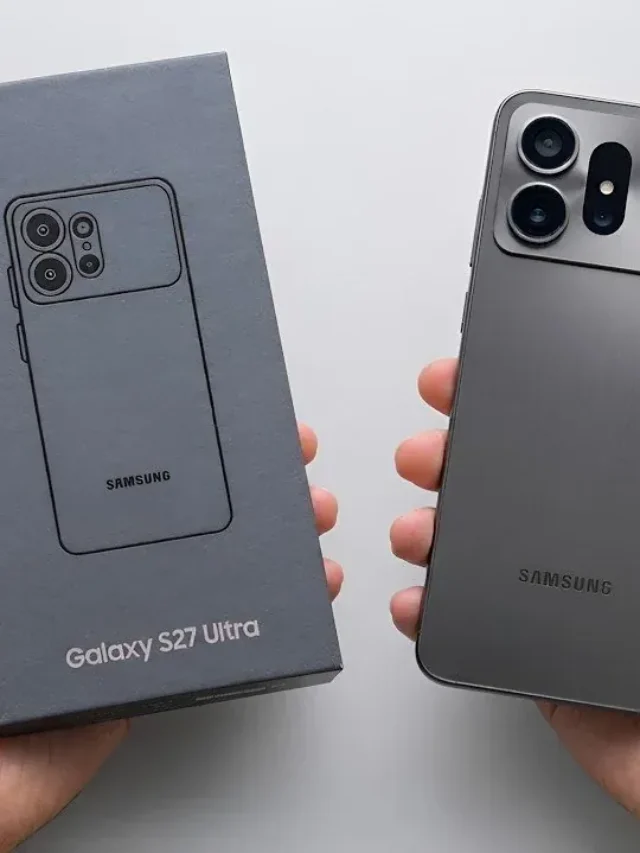
The iPhone Duo vs iPad Mini debate just became Apple’s most expensive identity crisis after both A20 Pro devices hit store shelves within two weeks of each other. Apple priced its first foldable smartphone at $1,999 (see regional pricing table below), while the redesigned OLED iPad mini starts at just $699 (see regional pricing table below). Remarkably, both machines weigh nearly an identical 254g (8.96 oz) and 255g (8.99 oz), forcing buyers to decide if pocketability is worth a $1,300 premium.
- Display Divide: The iPhone Duo unfolds into a 7.6-inch flexible OLED panel hitting 3,000 nits, whereas the iPad mini offers a rigid 8.5-inch OLED screen peaking at 1,200 nits.
- Hidden Silicon Catch: Both tablets run on the 2nm A20 Pro chip, yet 128GB and 256GB iPad mini models ship with a binned 5-core CPU instead of the Duo’s full 6-core processor.
- Stylus & Camera Split: Only the iPad mini supports Apple Pencil Pro with hover gestures, while the iPhone Duo counters with a 48MP Dual Fusion camera system.
- Durability Trade-Off: The iPhone Duo carries an IP68 rating but faces early hinge-cracking scrutiny, whereas the IP67-rated iPad mini relies on a proven rigid aluminum chassis.
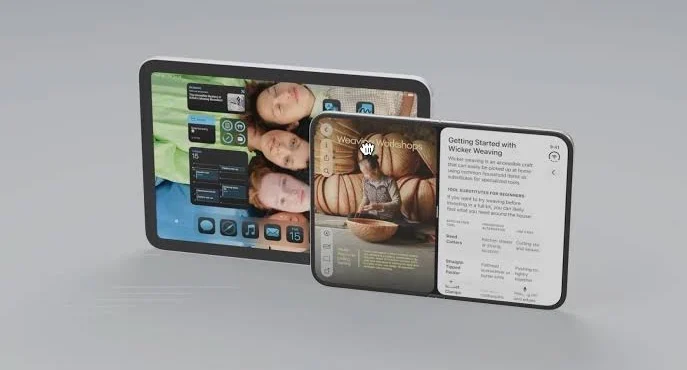
If you can buy a flagship iPhone 18 Pro and the new OLED iPad mini together for less than one iPhone Duo, does Apple’s compact tablet even have a reason to exist anymore?
The iPhone Duo vs iPad Mini Hardware Showdown Explained
Before comparing benchmark charts, two technical terms define this entire rivalry: 2nm chip binning and nano-texture OLED glass. Chip binning happens when manufacturers disable one processor core on slightly imperfect silicon dies to preserve yield rates, meaning lower-storage iPad mini tiers lose roughly 15% of their peak multithreaded ceiling. Meanwhile, Apple’s etched nano-texture coating scatters ambient glare across the screen without softening text, turning both devices into legitimate outdoor readers.
Apple set up this internal clash through two tightly spaced fall events. First, executives unveiled the iPhone Duo on September 9, 2026, at 10:00 AM PT / 1:00 PM ET / 5:00 PM GMT, ahead of its October 23 retail launch. Just days later on October 26, 2026, at 8:00 AM PT / 11:00 AM ET / 3:00 PM GMT, Apple quietly introduced the eighth-generation iPad mini, which began shipping on November 6.
Consequently, the iPhone Duo vs iPad Mini comparison is no longer theoretical speculation. Both machines sit side by side in Apple Stores right now, running iOS 27 and iPadOS 27 on identical 2nm silicon architecture. However, their physical engineering philosophies diverge sharply the moment you pick them up.
Display Tech: 7.6-Inch Foldable Canvas vs. 8.5-Inch Rigid OLED
Screen real estate remains the primary battleground in the iPhone Duo vs iPad Mini rivalry. When folded shut, the iPhone Duo presents a compact 5.4-inch Super Retina XDR outer screen (1,398 x 2,034 pixels) that handles one-handed replies effortlessly. Unfolding its 100-component titanium hinge reveals a 7.6-inch inner display (1,878 x 2,670 pixels) with ProMotion adaptive refresh rates and 3,000 nits of outdoor peak brightness.
By contrast, the iPad mini stretches its borderless Super Retina XDR OLED panel to 8.5 inches (2,316 x 1,512 pixels at 325 ppi) without increasing its overall footprint. Because it uses a traditional rigid glass substrate, you get zero display crease and native support for Apple Pencil Pro pressure sensitivity. Still, its 600-nit sustained brightness and 1,200-nit HDR peak fall well behind the iPhone Duo under direct sunlight.
Furthermore, durability reports from November 2026 highlight a sobering reality for early foldable adopters. Supply chain insiders indicate that a small batch of iPhone Duo units developed hairline panel fractures along the central hinge axis, prompting Apple to issue quiet replacement guidance to retail technicians. Meanwhile, the iPad mini pairs its rigid OLED screen with an Acoustic Display system that fires audio directly through transducers hidden beneath the glass.
A20 Pro Benchmarks and the Hidden Core-Binning Catch
On paper, both devices share Apple’s A20 Pro system-on-chip fabricated on a cutting-edge 2nm process. Early Geekbench 7 listings confirm that the iPhone Duo pairs 12GB of RAM with a 6-core CPU (2 super cores clocked at 4.93GHz plus 4 efficiency cores) and a 7-core GPU. In synthetic testing, the foldable scores 3,986 in single-core workloads and 11,067 in multi-core runs, alongside 3,085,164 on AnTuTu and 7,314 on 3DMark Wild Life Extreme.
However, buyer-beware fine print lurks inside the iPad mini configurator. While Apple advertises up to 60% faster multithreaded CPU speeds and 2.7x faster graphics over the previous A17 Pro tablet, the base 128GB and 256GB models ship with a binned 5-core CPU (2 super cores and 3 efficiency cores). You must upgrade to the 512GB tier to unlock the full 6-core CPU that comes standard inside every iPhone Duo.
Thermal management also separates these two machines during sustained gaming or 4K video rendering. The iPhone Duo houses a custom vapor-chamber cooling system that delivers 35% better sustained performance than last year’s flagships. Conversely, the ultra-thin 5.4mm (0.21 in) iPad mini relies on passive graphite dissipation across its broader aluminum backplate.
Apple Pencil Support, Cameras, and Daily Ergonomics
Accessory compatibility creates another sharp dividing line for digital note-takers and artists. The iPad mini supports the flagship Apple Pencil Pro, unlocking barrel-roll rotation, haptic squeeze shortcuts, and magnetic wireless charging on its flat side rail. By contrast, the iPhone Duo works strictly with the entry-level Apple Pencil (USB-C), lacking pressure sensitivity and hover detection entirely.
Camera hardware tilts heavily in favor of the foldable smartphone. Apple equipped the iPhone Duo with a 48MP Dual Fusion rear array (f/1.6 main and f/2.2 ultra-wide) capable of 4K 120fps Dolby Vision capture, plus 12MP outer and under-display selfie sensors. Meanwhile, the iPad mini sticks to a single 12MP (f/1.8) rear camera and a horizontal-edge 12MP Center Stage webcam built strictly for document scans and video calls.
Battery endurance and biometric security round out the daily usability equation. The iPhone Duo packs a 4,883 mAh dual-cell battery rated for 24 hours of mixed screen use (31 hours inner display, 44 hours outer screen), whereas the iPad mini houses a 5,108 mAh cell. Both rely on side-mounted Touch ID power buttons, though iOS 27.3 Beta 2 just added software-based outer-camera face unlock to the iPhone Duo for basic lock-screen convenience.
Complete Hardware Specifications Comparison
| Specification | iPhone Duo vs. iPad mini (2026) |
|---|---|
| Processor | iPhone Duo: Apple A20 Pro (2nm, 6-core CPU, 7-core GPU) / iPad mini: Apple A20 Pro (2nm, 5-core CPU on 128GB/256GB; 6-core on 512GB) |
| Memory & Storage | iPhone Duo: 12GB RAM; 256GB, 512GB, 1TB, 2TB / iPad mini: 128GB, 256GB, 512GB (nano-texture glass optional on 256GB/512GB) |
| Primary Display | iPhone Duo: 7.6-inch Foldable Super Retina XDR OLED (1,878 x 2,670), 120Hz ProMotion, 3,000 nits peak, nano-texture finish / iPad mini: 8.5-inch Super Retina XDR OLED (2,316 x 1,512), 1,200 nits HDR peak |
| Secondary Display | iPhone Duo: 5.4-inch Super Retina XDR outer OLED (1,398 x 2,034), ProMotion / iPad mini: None |
| Rear Camera | iPhone Duo: 48MP Fusion Main (f/1.6) + 48MP Ultra Wide (f/2.2), 4K 120fps / iPad mini: Single 12MP Wide (f/1.8), 4K 60fps |
| Front Camera | iPhone Duo: 12MP Center Stage outer + under-display inner camera / iPad mini: 12MP Center Stage horizontal-edge camera |
| Battery & Charging | iPhone Duo: 4,883 mAh dual-battery, up to 24 hrs mixed playback, MagSafe/Qi2 & USB-C / iPad mini: 5,108 mAh battery, USB-C charging |
| Dimensions & Weight | iPhone Duo: 164.6 x 117.8 x 5.2 mm (0.20 in) open; 254g (8.96 oz) / iPad mini: 195.3 x 132.6 x 5.4 mm (0.21 in); 255g (8.99 oz) |
| Durability & Stylus | iPhone Duo: IP68, Grade 5 titanium, Apple Pencil (USB-C) / iPad mini: IP67, aluminum unibody, Apple Pencil Pro & USB-C |
| Connectivity | Both: Apple N1 chip (Wi-Fi 7, Bluetooth 6.0, Thread), Apple C2 5G modem (standard on Duo; optional on iPad mini), eSIM only |
| Starting US Price | iPhone Duo: $1,999 (256GB) / iPad mini: $699 (128GB Wi-Fi) |
Global Pricing Breakdown Across Major Markets
| Region & Currency | Base Starting Price (iPhone Duo / iPad mini) |
|---|---|
| United States (USD) | $1,999 (iPhone Duo 256GB) / $699 (iPad mini 128GB Wi-Fi) |
| India (INR) | ₹2,99,900 (iPhone Duo 256GB) / ₹82,900 (iPad mini 128GB Wi-Fi) |
| European Union (EUR) | €2,369 (iPhone Duo 256GB) / €749 (iPad mini 128GB Wi-Fi) |
| United Kingdom (GBP) | £1,999 (iPhone Duo 256GB) / £699 (iPad mini 128GB Wi-Fi) |
The Bigger Picture: How Apple Split Its Portable Lineup
Apple’s simultaneous push into foldable phones and OLED compact tablets puts immediate pressure on rival ecosystem builders like Samsung and Huawei. Instead of letting its first foldable cannibalize entry-level tablet sales, Apple deliberately priced the iPhone Duo as an ultra-luxury halo device while elevating the iPad mini into a true OLED studio slate. As a result, Android hardware makers can no longer rely on OLED displays alone to differentiate their 8-inch gaming tablets from Apple’s entry tier. More importantly, software developers now have unified iOS 27 and iPadOS 27 windowing frameworks across two nearly identical screen sizes, accelerating tablet-grade app optimization across the entire App Store.
Unfiltered Opinion: Should You Buy One Device or Two?
Did Apple kill the small tablet? Not even close—in fact, the $1,999 price tag on the iPhone Duo makes the $699 iPad mini look like the biggest bargain in Apple’s entire catalog. Unless you desperately want a single 254g pocketable machine that replaces both your phone and e-reader on flights, spending $1,300 extra for a smaller 7.6-inch crease-prone display makes little financial sense. Buy the iPad mini if you sketch with Apple Pencil Pro, read in bed, or want a worry-free OLED canvas without first-generation hinge anxiety. Save the iPhone Duo strictly for road warriors who value instant one-device convenience over raw value per dollar.
- K.K., Founder of TechKomo