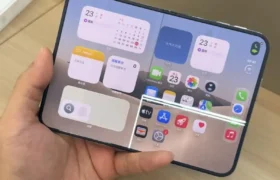
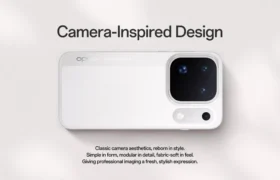
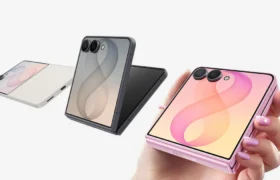
Apple is actively testing under-display Face ID technology on early prototypes to fix the primary compromise of its foldable lineup.
Consequently, early adopters might want to reconsider their purchase before spending an eye-watering sum.
- The Missing Feature Fixed: Early lab tests reveal facial recognition embedded beneath the outer glass panel.
- Prototype Stage: Hardware revisions are actively running in Cupertino ahead of a projected late 2027 release.
- Ergonomic Enhancements: Engineers are also experimenting with restoring the tactile Action button.
- Astronomical Baseline: The first-generation model arrives at retail counters for $1,999 (approx. ₹1,66,000 / €1,820 / £1,580).
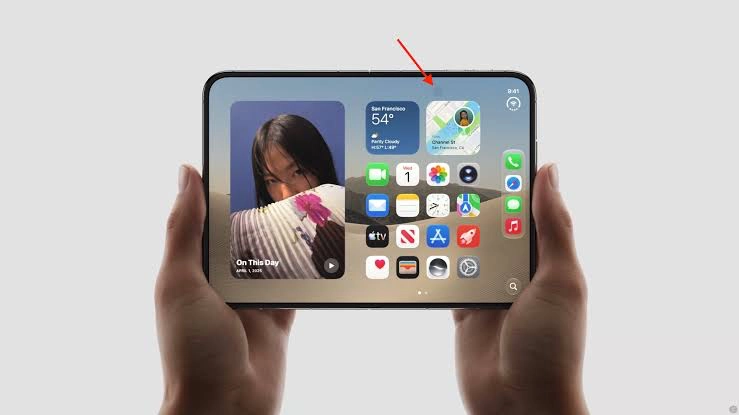
Will premium smartphone buyers feel buyers’ remorse over buying a first-gen device that skips Apple’s signature biometric security?
To clarify, under-display authentication tucks complex infrared cameras and dot projectors directly behind active display pixels.
Therefore, your screen remains completely uninterrupted while scanning your facial geometry securely.
TechKomo Disclaimer: The details discussed below are based on early industry leaks and rumors. Official specifications may vary.
Why the First-Gen Foldable Ditched Face ID
Supply chain insiders reveal that physical thickness created a major packaging hurdle for Apple.
The current foldable chassis measures just 5.2mm (0.20 inches) thick when fully opened.
Because the chassis is razor-thin, engineers simply ran out of internal clearance for traditional TrueDepth prisms.
As a direct result, Apple settled on an iPad-style capacitive fingerprint sensor integrated into the side power button.
However, flagship buyers spending top dollar expect effortless facial recognition rather than reaching for a side frame.
Moreover, moving away from facial biometrics breaks seamless continuity across Apple ecosystem workflows.
Lab Leaks Expose Under-Screen Authentication
Recent industry leaks indicate Cupertino is running validation runs on advanced under-display Face ID modules.
These specialized prototypes conceal infrared emitters and receiver sensors beneath the 5.4-inch external OLED cover panel.
Furthermore, custom sub-pixel arrays allow infrared light to penetrate through the screen without degrading visual clarity.
Because this breakthrough removes bulky sensor notches, the exterior screen achieves a clean, all-screen silhouette.
Meanwhile, development teams are concurrently exploring whether to retain dual biometrics or drop the fingerprint key entirely.
Besides biometrics, internal testing reveals strong interest in resurrecting the versatile Action button along the titanium rail.
| Hardware Component | First-Gen Baseline | Rumored Next-Gen Upgrade |
|---|---|---|
| Primary Biometrics | Capacitive Side-Mounted Touch ID | Under-Display Face ID |
| Outer Display | 5.4-inch Super Retina XDR (120Hz) | 5.4-inch True Bezel-Less OLED |
| Inner Display | 7.6-inch Foldable OLED (3,000 nits) | 7.6-inch Anti-Reflective Creaseless OLED |
| Silicon Processor | 3nm Apple A20 Pro | 2nm Next-Gen Apple Silicon |
| Chassis Weight | 254g (8.96 oz) | Sub-245g (8.64 oz) Target |
| Retail Starting Price | $1,999 (approx. ₹1,66,000 / €1,820 / £1,580) | $1,999 (approx. ₹1,66,000 / €1,820 / £1,580) |
Release Timeline and Supply Hurdles
Early supply indicators suggest this major hardware refresh will not debut before late 2027.
Historically, Apple schedules high-profile flagship announcements during its annual keynote window in mid-September.
Global broadcasts traditionally go live at 10:00 AM PT / 1:00 PM ET / 5:00 PM GMT.
Nevertheless, complex manufacturing yields for micro-optical display layers remain an ongoing industrial challenge.
If sensor transparency targets fall short during quality testing, executive leadership could push deployment back another release cycle.
Therefore, engineers are evaluating multiple design contingencies before committing to mass factory retooling.
The Bigger Picture
This aggressive internal development shows that Apple refuses to leave its foldable lineup vulnerable against seasoned Android competitors.
By prioritizing hidden facial authentication, Apple applies immense pressure on rivals whose foldable cameras still leave visible punch holes.
An Unfiltered Look at First-Gen Regret
Spending two grand on a phone that forces you to use an iPad-grade power button feels like a bitter pill to swallow.
First-generation Apple hardware almost always acts as an expensive public test run for far superior follow-ups.
If you value seamless daily convenience, waiting for hidden biometrics is easily the smarter financial play.
- K.K., Founder of TechKomo