Samsung is quietly preparing a seismic hardware overhaul, and the latest Samsung Galaxy S27 Ultra leaks suggest mobile computing is about to hit an unprecedented technological ceiling.
- 2nm Architecture: Early supply-chain dispatches point to the cutting-edge Snapdragon 8 Elite Gen 6 chipset built on TSMC’s next-gen 2nm node.
- Camera Consolidation: Samsung may retire the legacy secondary 3x sensor in favor of a streamlined high-resolution 200MP + 50MP + 50MP triple-lens array.
- Bigger Battery Silicon: Internal roadmaps hint at a denser 5,500mAh to 5,700mAh silicon-carbon cell with boosted 60W wired charging.
- Projected Window & Pricing: Global launch slated for late January or early February 2027, maintaining an entry price of $1,299.
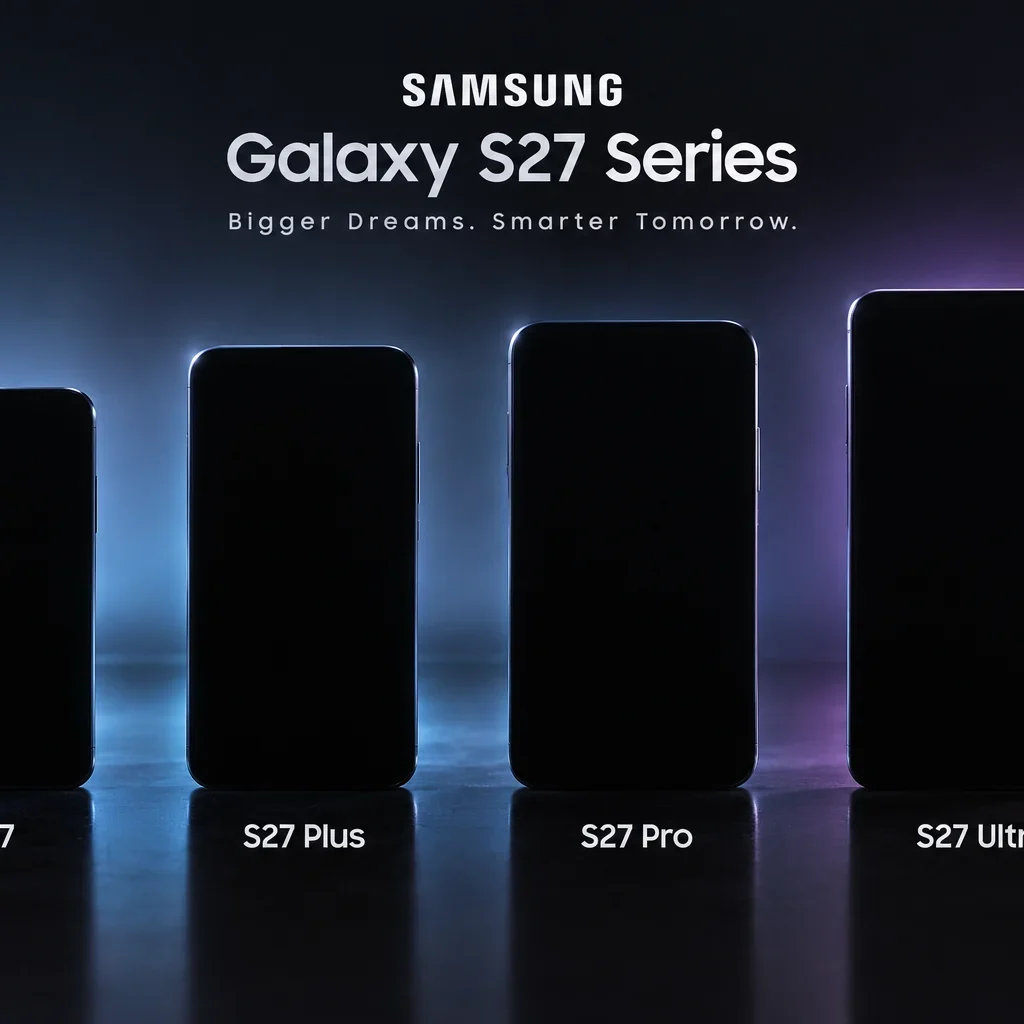
TechKomo Disclaimer: The details discussed below are based on early industry supply chain leaks and roadmaps. Official specifications and launch timelines may vary.
Will Samsung’s radical sensor overhaul finally cement its mobile photography supremacy against Cupertino’s relentless advancements?
In simple terms, shifting from 3nm to a 2nm manufacturing node allows chip designers to pack billions more transistors into a minuscule footprint, yielding dramatically faster speeds alongside significantly lower thermal throttling and power draw.
The Silicon Race: TSMC 2nm and Dual-Chip Speculation
Every flagship mobile launch hinges directly on its core silicon engine.
Industry murmurs confirm Samsung’s foundry is accelerating its SF2P fabrication node.
However, the premier Galaxy flagship will heavily rely on the custom Snapdragon 8 Elite Gen 6 for Galaxy.
Qualcomm’s forthcoming 2nm architecture promises a monumental leap in raw computational efficiency.
Early multi-core simulation estimates show benchmark gains exceeding 25% in overall power efficiency.
Simultaneously, single-core CPU speeds are forecasted to cross the blistering 5.0 GHz threshold.
Samsung could also field a regional Exynos 2700 version for base units, but global Ultra devices will strictly favor Qualcomm silicon.
Heavy mobile gamers and power multitaskers can anticipate noticeably cooler device frames during intense workloads.
Furthermore, standard base models are slated to ship with 12GB of next-gen LPDDR6 RAM, while premium variants will reach 16GB.
Streamlined Optics: Is the Four-Camera Era Officially Ending?
Mobile photography enthusiasts have long enjoyed Samsung’s quad-camera versatility.
Nevertheless, fresh CAD renders indicate an unexpected design pivot toward a simplified three-lens arrangement.
Reliable industry insiders report that the aging 10MP 3x optical telephoto lens will finally be decommissioned.
Instead, Samsung aims to handle medium-range zoom through sensor-crop algorithms driven by a customized 200MP primary sensor.
This primary shooter will pair seamlessly with a dedicated 50MP periscope telephoto lens delivering native 5x optical reach.
Meanwhile, the ultra-wide module retains a crisp 50MP sensor equipped with ultra-fast phase-detection autofocus.
Fewer physical sensors mean engineers can expand lens barrel sizes for superior low-light exposure.
Software image processing will harness real-time neural engines to reconstruct intermediate zoom brackets with exceptional sharpness.
The selfie unit remains anchored at a capable 12MP front camera nestled cleanly within the top-center punch hole.
Sleeker Ergonomics and 3,000-Nit Dynamic AMOLED Brilliance
Despite internal layout reorganizations, the exterior form factor retains its signature commanding presence.
The device is projected to sport a massive 6.9-inch Dynamic AMOLED 2X display.
Engineers have shaved chassis thickness down to roughly 7.97mm, bringing improved hand comfort compared to previous iterations.
Users will experience a radiant panel featuring a peak brightness capacity of 3,000 nits.
Variable refresh rates will seamlessly sweep between 1Hz and 120Hz via updated LTPO backplane technology.
Outdoor legibility under blazing sunlight should surpass nearly every competing flagship on the market.
Additionally, Samsung’s proprietary anti-reflective Corning Gorilla Armor glass will return with further scratch-resistance upgrades.
Naturally, the embedded S Pen stylus remains housed securely inside the lower-left titanium frame rail.
Silicon-Carbon Battery Tech and Accelerated 60W Charging Speeds
Battery longevity has consistently served as a chief consumer demand.
To address power-hungry on-device artificial intelligence engines, Samsung is exploring high-density silicon-carbon chemistry.
This chemical density bump allows battery capacity to climb toward a generous 5,500mAh to 5,700mAh rating without inflating thickness.
Consequently, prolonged gaming sessions and heavy camera recording will draw down battery percentages far slower.
Furthermore, wired charging capabilities are tipped to advance from the long-standing 45W cap up to 60W fast charging.
Wireless charging speeds will comfortably hold at 25W Qi2-certified wireless transfer rates.
A standard zero-to-eighty percent top-up should clock in comfortably under 38 minutes.
Expected Launch Timeline and Global Price Breakdown
Samsung rarely deviates from its proven launch calendar.
The entire lineup will almost certainly debut during an official Galaxy Unpacked keynote in late January or early February 2027.
Keynote livestreams will broadcast globally at 10:00 AM PT / 1:00 PM ET / 18:00 GMT.
Pre-orders traditionally open immediately post-keynote, with worldwide retail deliveries rolling out two weeks later.
Pricing across the global landscape is anticipated to hold steady despite rising component manufacturing expenditures.
The entry 256GB storage tier is slated to retail at $1,299 USD.
The mid-tier 512GB configuration will likely command $1,419 USD.
Power users selecting the fully loaded 1TB flagship variant can expect a price tag around $1,659 USD.
Samsung Galaxy S27 Ultra: Projected Specifications
| Feature | Leaked Specification |
|---|---|
| Display | 6.9-inch Dynamic AMOLED 2X, QHD+, 1-120Hz LTPO, 3,000 nits |
| Processor | Qualcomm Snapdragon 8 Elite Gen 6 for Galaxy (2nm TSMC) |
| RAM & Storage | 12GB / 16GB LPDDR6 RAM; 256GB / 512GB / 1TB UFS 4.1 |
| Rear Cameras | 200MP Main + 50MP Ultra-Wide + 50MP Periscope (5x Optical) |
| Front Camera | 12MP with Dual Pixel PDAF & 4K60 HDR capture |
| Battery & Charging | 5,500mAh – 5,700mAh; 60W Wired, 25W Wireless Qi2 |
| Dimensions | 163.76 x 78.25 x 7.97 mm; Titanium Frame |
| Software | One UI 9 based on Android 17 (7 Years of OS Updates) |
| Base Price | Starting at $1,299 USD |
The Bigger Picture: Market Realities and Rivalry Pressure
The smartphone ecosystem is fast approaching hardware parity, forcing manufacturers to rethink unnecessary component bloat.
By potentially shedding an extraneous telephoto sensor to focus resources on larger silicon and battery chemistry, Samsung is making a pragmatic defensive play.
This strategic pivot directly counters Apple’s aggressive thinness targets and custom silicon integration.
Simultaneously, competitive Chinese OEMs pushing 6,000mAh silicon-carbon cells have compelled Samsung to finally abandon its conservative charging thresholds.
Ultimately, this upcoming iteration represents a decisive shift from spec-sheet marketing toward meaningful day-to-day usability.
My Take: An Overdue Shift Toward Practical Refinement
I believe trimming the secondary telephoto camera is the smartest design choice Samsung has made in years.
Carrying two mediocre optical zoom lenses never made ergonomic sense when high-resolution computational cropping accomplishes the exact same task.
If redirecting that internal space delivers a genuine 5,700mAh silicon battery and a thinner 7.97mm frame, buyers win completely.
We no longer need gimmicky hundred-times zoom tricks that yield muddy watercolor results.
Give us blistering 2nm sustained efficiency, instant 60W wired charging, and clean industrial design.
If these hardware dispatches materialize accurately, Samsung will retain its heavyweight crown without breaking a sweat.
- K.K., Founder of TechKomo