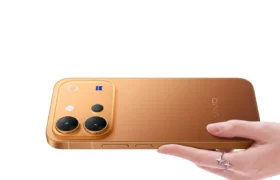
If you were expecting a massive front-facing optical upgrade next year, prepare for bitter disappointment because the upcoming Galaxy S27 selfie camera will completely bypass standard buyers.
- Familiar Hardware: The entry-level flagship and its larger sibling will reuse the existing 12MP front sensor found on the previous generation.
- Widening Lineup Tiering: Upgraded 16MP front shooters are reportedly restricted exclusively to the premium tier.
- Extended Stagnation: This marks the fifth consecutive product cycle relying fundamentally on identical core resolution hardware.
- Pricing Expectations: Global retail pricing is projected to hold steady at $799 / €899 / £799 despite static optics.
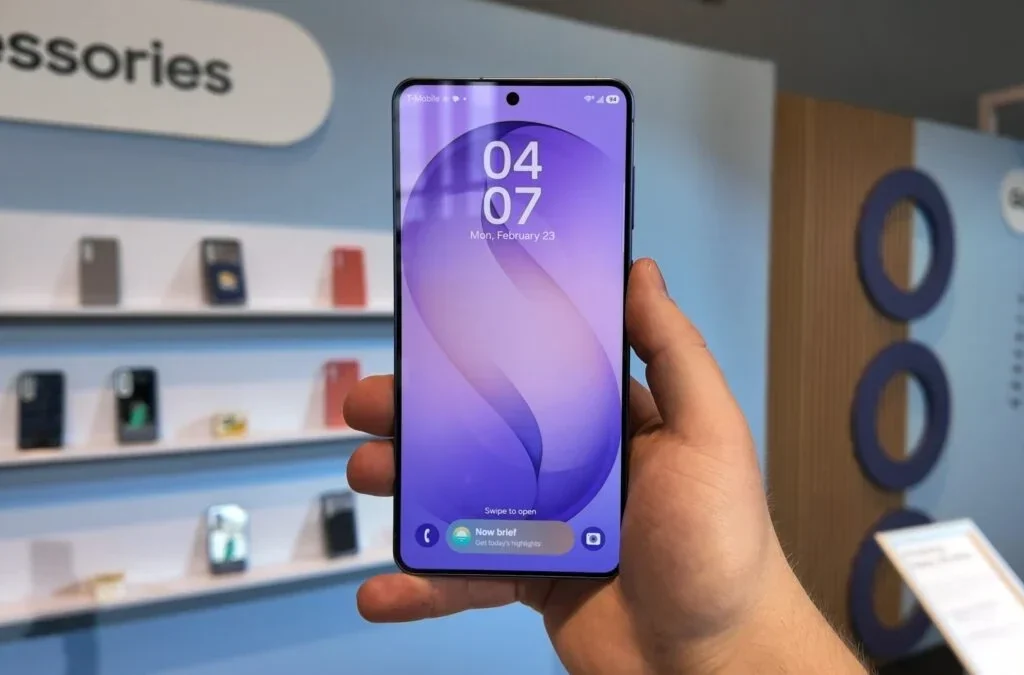
Why would a titan charge flagship money in 2027 for front-facing camera parts sourced half a decade ago?
In plain English, image sensors are the miniature digital retinas that convert incoming ambient photons into raw electronic signals.
A static sensor means your actual optical depth and native low-light resolution will not fundamentally change regardless of how clever the processing algorithms claim to be.
Hardware Stagnation Under the Microscope
Supply chain insiders indicate that the standard flagship lineup will not receive updated front-facing optics next year.
Instead, European regulatory tracking and component registries indicate that the standard variant retains an unchanged 12MP autofocus front sensor with an f/2.2 aperture.
This specific optical module traces its underlying lineage directly back to older hardware footprints, showing zero native megapixel evolution over several successive generations.
Conversely, early engineering blueprints reveal that the pricier Ultra tier will exclusively step up to a bespoke 16MP selfie camera.
Industry leaks suggest this new 16MP module may adopt an innovative square sensor format to capture landscape crops without physical device rotation.
Consequently, standard buyers are left looking at marginal computational adjustments rather than any genuine physical optical leaps.
| Hardware Parameter | Standard Variant (Leaked) | Plus Variant (Leaked) | Ultra Variant (Leaked) |
|---|---|---|---|
| Front Camera Resolution | 12MP AF | 12MP AF | 16MP AF (Square Format) |
| Main Rear Sensor | 50MP OIS | 50MP OIS | 200MP OIS |
| Display Panel | 6.2-inch Dynamic AMOLED 2X | 6.7-inch Dynamic AMOLED 2X | 6.9-inch Dynamic AMOLED 2X |
| Processor Platform | Exynos 2700 / Snapdragon 8 Gen 5 | Exynos 2700 / Snapdragon 8 Gen 5 | Snapdragon 8 Gen 5 for Galaxy |
| Battery Capacity | 4,000mAh (25W) | 4,900mAh (45W) | 5,000mAh (65W) |
| Starting Price (Est.) | $799 / €899 / £799 | $999 / €1,149 / £999 | $1,299 / €1,449 / £1,249 |
Silicon Efficiency vs. Physical Optics
Internal roadmaps suggest the mobile division is banking heavily on machine learning to mask this physical camera stagnation.
The upcoming 2nm silicon architecture promises a 28% boost in Neural Processing Unit performance to polish noise reduction.
However, artificial sharpening and synthetic tone mapping can only do so much when physical light collection remains identical.
Furthermore, competitors are rapidly outmaneuvering this conservative hardware approach across global markets.
Rival devices already boast large 32MP and 50MP selfie sensors with dedicated quad-phase autofocus across their entire standard lineups.
Meanwhile, this decision deliberately widens the feature canyon between accessible flagships and high-margin luxury tiers.
Global launch timelines point toward an early reveal window scheduled for January 2027 at 10:00 AM PT / 1:00 PM ET / 6:00 PM GMT.
The overall smartphone arena is currently facing prolonged upgrade cycles, and aggressive component recycling risks driving mainstream users straight into the arms of hungry rivals who refuse to cut corners on sub-thousand-dollar flagships.
Reusing the identical Galaxy S27 selfie camera hardware across consecutive product generations is a blatant exercise in corporate margin protection that treats standard flagship customers like second-class citizens.
If you already own a recent device, skipping this refresh cycle is an absolute no-brainer unless you are prepared to swallow the eye-watering price tag of the top-tier Ultra.
- K.K., Founder of TechKomo