Smartphone photography is hitting an unprecedented tipping point as the Oppo Find X10 Pro Max officially introduces the world to the first commercial triple 200MP camera system.
Quick Highlights
- World-first setup deploying three distinct 200-megapixel sensors across the primary, ultra-wide, and telephoto focal lengths.
- Massive 8,000mAh silicon-carbon battery paired with 80W wired and 50W wireless charging capabilities.
- Powered by MediaTek’s cutting-edge 2nm Dimensity 9600 Pro platform alongside a 144Hz LTPO OLED panel.
- Global launch scheduled for October 21, 2026, rolling out worldwide following initial availability.
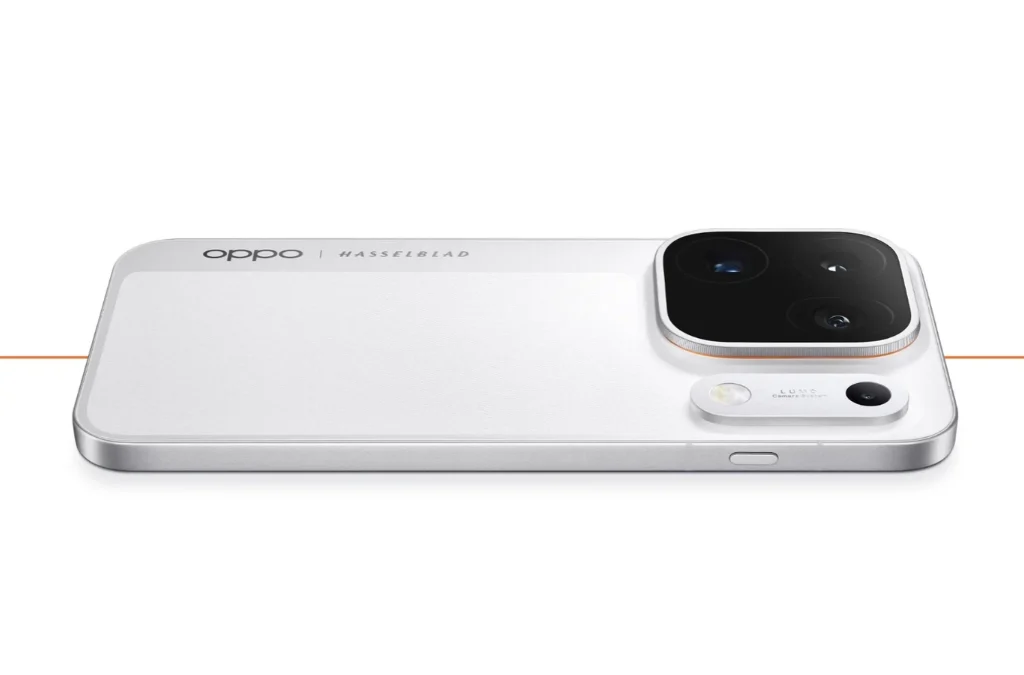
Can stuffing 600 million total pixels inside a glass slab actually fix mobile zoom degradation, or is this just marketing excess running wild?
In practical terms, using a triple 200MP camera system means the ultra-wide and zoom lenses capture identical raw detail as the main shooter.
Consequently, night photography and digital cropping no longer suffer from muddy textures when you switch lenses.
Breaking Down the Triple 200MP Hardware
For years, brands paired an elite primary sensor with compromised secondary lenses.
However, supply chain insiders confirm Oppo has completely eliminated that hardware disparity.
The primary lens uses a large 1/1.3-inch 200MP sensor featuring an f/1.5 aperture and optical image stabilization (OIS).
Next, the ultra-wide camera breaks records with a 1/1.56-inch 200MP unit covering an expansive 124-degree field of view.
Meanwhile, the periscope telephoto module brings a 200MP shooter offering 3x optical zoom and macro focus down to 10cm (3.9 inches).
Furthermore, all three rear sensors support cinematic 8K Log video recording and 4K at 120fps with Dolby Vision.
To process this staggering amount of visual data, Oppo integrated its proprietary LUMO True Image Engine.
This dedicated pipeline cuts shooting shutter lag between consecutive high-resolution captures down to just 0.7 seconds.
Additionally, legendary camera firm Hasselblad provides tailored color calibration profiles.
Raw Performance and Display Specs
Under the hood sits the flagship MediaTek Dimensity 9600 Pro built on a class-leading 2nm process.
Moreover, early Geekbench disclosures reveal multi-core computing scores outperforming previous silicon generations by 32%.
Up front, users get a flat 6.78-inch LTPO OLED screen boasting razor-thin 1.15mm bezels.
The panel delivers a fluid 144Hz refresh rate, a blinding 3,600 nits local peak brightness, and high-frequency 3,840Hz PWM dimming.
Meanwhile, the phone tipped the scales at 235g (8.28 oz), largely due to its rugged frame and thermal cooling chamber.
Water and dust exposure are handled effortlessly thanks to an uncompromising IP69 durability rating.
Oppo Find X10 Pro Max Quick Specifications
| Component | Specification |
|---|---|
| Processor | MediaTek Dimensity 9600 Pro (2nm) |
| Display | 6.78-inch Flat LTPO OLED, 144Hz, 3,600 nits peak |
| Rear Cameras | 200MP Main (OIS) + 200MP Ultra-Wide (124°) + 200MP Telephoto (3x, OIS) |
| Front Camera | 50MP Autofocus (4K at 60fps) |
| Battery & Charging | 8,000mAh Silicon-Carbon, 80W Wired, 50W Wireless |
| Starting Price | $960 / €880 / £760 (Converted from CNY 6,799) |
Global Launch Windows and Pricing
Official launch dates place the worldwide unveiling on October 21, 2026, broadcasting live at 3:00 AM PT / 6:00 AM ET / 10:00 AM GMT.
Retail shipments for the base 12GB RAM and 256GB storage trim convert directly to approximately $960 / €880 / £760.
Conversely, the top-tier 16GB RAM and 1TB storage tier reaches roughly $1,190 / €1,090 / £945.
Global buyers will choose from three distinct chassis finishes: Light Titanium, Moon White, and Warm Orange.
The Bigger Picture
This release sends shockwaves through the consumer tech space by throwing immense competitive pressure on Samsung and Apple.
While rival flagships still lean heavily on algorithmic upscaling, delivering a triple 200MP camera system proves mobile hardware can handle extreme raw resolution natively.
My Take
Packing three 200MP sensors alongside an 8,000mAh battery sounds like complete overkill on paper.
Yet, solving the notorious drop in image quality across different lenses is exactly what mobile photography enthusiasts have demanded for half a decade.
Unless physical pocket strain turns you off, this monster stands as one of 2026’s most audacious tech milestones.
- K.K., Founder of TechKomo