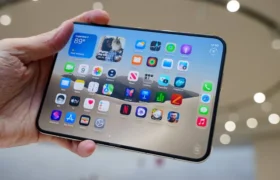
The long-dreaded software pivot is finally official as the OnePlus Android 17 update officially drops, shutting the door on an entire era of enthusiast Android culture.
- Global stable rollout commences in waves starting late October 2026 across flagship lineups.
- All eligible global devices are systematically migrating from OxygenOS directly to ColorOS 17.
- The unified build debuts with a revamped animation engine, severe memory reductions, and deep ecosystem cross-compatibility.
- Rollback builds to OxygenOS 16 will remain available temporarily for power users willing to perform a full system wipe.
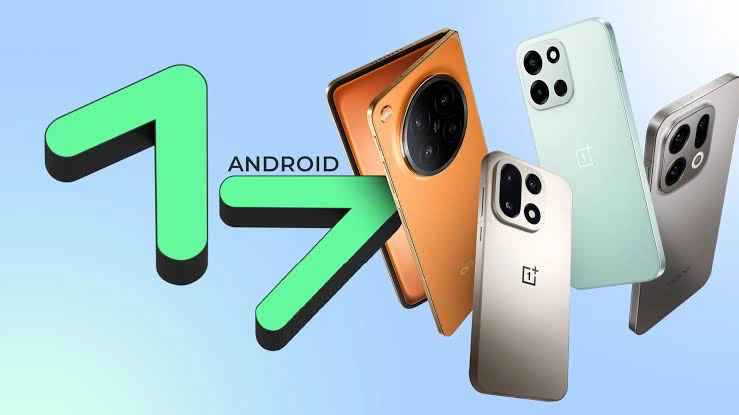
Can a flagship brand survive when it strips away the very identity that built its cult-like community?
For over a decade, clean stock-like interfaces defined fast day-to-day operation for tech purists everywhere.
However, maintaining two independent operating skins has proven too costly for parent conglomerate BBK Electronics.
The Great Software Consolidation: The OnePlus Android 17 Update Explained
The decision to retire the beloved interface marks the definitive end of separate codebases across global hardware channels.
Consequently, the OnePlus Android 17 update represents a direct shift to unified ColorOS 17 firmware across all territories.
This migration has already started rolling out to flagship devices including the OnePlus 15 and OnePlus Pad 4.
Furthermore, subsequent batches for models like the OnePlus 15R and OnePlus 13 follow immediately after.
Early deployment kicked off in select regional testbeds across India and China ahead of broader international OTA schedules.
Meanwhile, rollouts are set to propagate globally at 12:00 AM PT / 3:00 AM ET / 7:00 AM GMT in controlled batches.
Under The Hood: Performance Gains Versus Visual Nostalgia
Behind the polarizing visual change lies a massive technical refactoring of system processes.
Specifically, the new software layer integrates a specialized rendering engine that reduces screen processing load by 30%.
Overall active RAM usage drops by roughly 25%, freeing substantial system resources for background multitasking.
In addition, an upgraded dynamic flow pipeline improves overall app launch stability during intensive daily gaming sessions.
Nevertheless, loyal enthusiasts will immediately notice the disappearance of traditional monochrome stock aesthetic touches.
Instead, dynamic lock screen fluid widgets and squishy physics-based icon animations now take center stage.
| Feature Category | ColorOS 17 (New Stable Build) | OxygenOS 16 (Preceding Release) |
|---|---|---|
| Android Version | Android 17 | Android 16 |
| Primary Architecture | Unified Global ColorOS Codebase | Customized OxygenOS Surface Layer |
| System Overhead | 25% Less Memory Consumption | Baseline RAM Allocation Profile |
| Rendering Workload | 30% Reduction in GPU Screen Load | Standard Pipeline Rendering |
| Flagship Hardware Base | Snapdragon 8 Gen 5 / Snapdragon 8 Gen 4 | Snapdragon 8 Gen 4 / Gen 3 |
| Weight & Handling (Phone 15) | 205g (7.23 oz) | 220g (7.76 oz) |
| Global Flagship Launch Price | $899 (approx. ₹74,999 / €820 / £710) | $799 (approx. ₹66,500 / €730 / £630) |
| Rollback Capability | Full Factory Reset to OxygenOS 16 Available | N/A (Standard Stable Track) |
The Rollout Timeline Across Global Channels
The transition will not hit every pocket around the world at the exact same moment.
Flagship owners holding modern $899 (approx. ₹74,999 / €820 / £710) devices will receive the over-the-air prompt first.
Mid-range devices and earlier generational hardware will slowly see the OTA drop between November and December.
However, anyone reluctant to leave the familiar legacy UI can refuse the automatic update prompt.
OnePlus has verified that an official rollback package exists for users wanting to stay on OxygenOS 16.
Bear in mind that choosing this path triggers a mandatory, irreversible data wipe.
The Bigger Picture
This sudden unification is a ruthless corporate efficiency play designed to slash development costs and accelerate software release cadences across multiple sister brands. By dropping custom regional forks and pooling engineers onto a singular operating layer, parent brand BBK puts immense pressure on rivals like Samsung and Xiaomi, who still battle fragmented software update schedules.
Unfiltered Opinion
Let us be completely honest about what just transpired: the original soul of OnePlus has officially been put out to pasture.
While the speed gains and reduced memory usage of the OnePlus Android 17 update are objectively impressive, the phone in your hand no longer feels distinct from an Oppo or Realme device.
For years, the clean, bloat-free software was the only reason enthusiasts overlooked compromises in secondary camera hardware or water-resistance ratings.
Now, stripped of its minimalist software edge, the hardware is forced to compete solely on spec sheets and raw price tags.
It is an undeniably capable daily driver, but the days of “Never Settle” uniqueness are officially over.
- K.K., Founder of TechKomo