Fresh insider reports indicate that Samsung Galaxy S27 Ultra leaks have revealed major redesigns, upgraded silicon, and massive battery changes for the 2027 flagship.
- Silicon Power: Expected next-gen 2nm architecture powered by either Qualcomm’s Snapdragon 8 Elite Extreme Gen 6 or Samsung’s in-house Exynos 2700.
- Battery Expansion: Upgraded silicon-carbon battery pack reaching between 5,500mAh and 5,700mAh with 60W fast charging.
- Camera Overhaul: Brand-new 200MP ISOCELL HP6 primary sensor paired with a streamlined triple-lens system ditching the legacy 3x module.
- Chassis Dimensions: Refined frame measuring 163.76 x 78.25 x 7.97 mm with ultra-slim display bezels around 1.28mm.
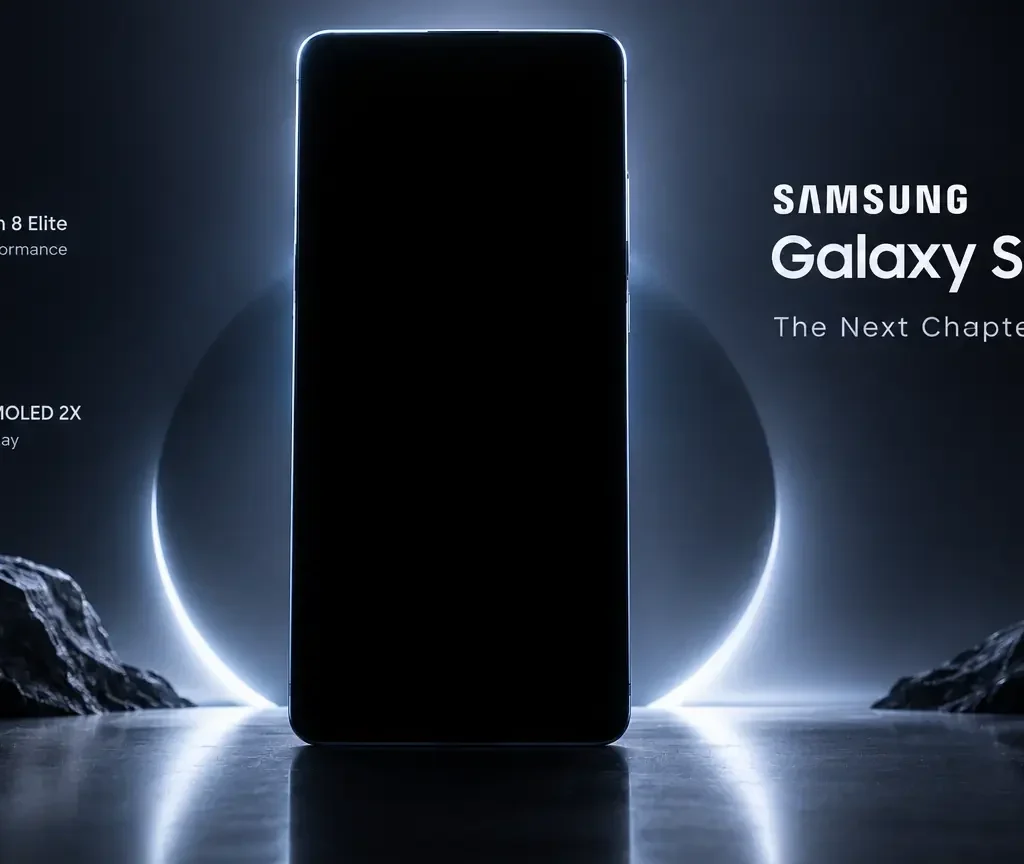
TechKomo Disclaimer: The details discussed below are based on early industry leaks and rumors. Official specifications may vary.
Will Samsung’s shift to a high-density silicon battery and redesigned chassis finally neutralize aggressive competition from rival Android flagships?
Modern flagship phones increasingly rely on silicon-carbon battery technology, which packs significantly more electrical capacity into identical physical footprints without adding bulk.
Meanwhile, display advancements aim to eliminate eye fatigue through hardware-level DC dimming rather than standard low-frequency pulse-width modulation.
The 2nm Silicon Showdown: Exynos 2700 vs Snapdragon 8 Elite Extreme
Processing power remains the premier battleground for next-generation mobile hardware.
Supply chain reports reveal that mass production for the Exynos 2700 has already commenced on Samsung Foundry’s second-generation 2nm SF2P process node.
Simultaneously, Qualcomm’s competing Snapdragon 8 Elite Extreme Gen 6 aims to shatter clock speed records by crossing the 5.0 GHz barrier.
However, thermal engineering remains a critical challenge when driving mobile silicon past these unprecedented clock speeds.
Therefore, Samsung is actively evaluating thermal dissipation thresholds to determine regional chipset distribution across global markets.
Early internal benchmarking leaks suggest multi-core performance gains exceeding 25% compared to previous generations.
Graphic rendering efficiency also shows marked gains, particularly for native ray-tracing applications in mobile gaming.
Consequently, consumers can anticipate desktop-class sustained processing without premature thermal throttling.
Camera Module Evolution and Sensor Shifts
Camera hardware is receiving its first structural layout adjustment in multiple release cycles.
Multiple trusted supply chain sources suggest Samsung may discard the standalone 3x optical telephoto lens entirely.
Instead, the rear array will feature a potent 200MP ISOCELL HP6 primary sensor, a 50MP ultra-wide lens, and a 50MP periscope module with 5x optical zoom.
This high-resolution primary sensor will handle intermediate 2x to 4x focal lengths through in-sensor sensor-crop algorithms.
Furthermore, engineering schematics indicate the rear camera bump measures approximately 4.64mm to 4.69mm in thickness.
This added physical depth accommodates upgraded optics with improved light-gathering capabilities in low-light environments.
Color fringing and flare artifacts should see substantial reductions thanks to advanced anti-reflective lens coatings.
Display Engineering, Form Factor, and Ergonomics
A refined visual profile defines the latest CAD renders circulating among industry analysts.
The front fascia sports a 6.9-inch Dynamic AMOLED 2X display capable of reaching peak brightness levels of 3,000 nits.
Moreover, display border bezels are reportedly trimming down to a razor-thin 1.28mm.
Screen fatigue receives a direct hardware fix through the anticipated integration of full-range DC dimming.
This adjustment completely bypasses harsh low-frequency flicker that affects sensitive users in dark environments.
Weight distribution is also optimized, with the overall device weight settling around 218 grams.
Standard retail colorways will likely feature Black, Blue, Light Pink, and White titanium finishes.
| Specification | Samsung Galaxy S27 Ultra (Leaked / Anticipated) |
|---|---|
| Display | 6.9-inch Dynamic AMOLED 2X, 120Hz, QHD+, 3,000 nits peak |
| Processor | Snapdragon 8 Elite Extreme Gen 6 / Exynos 2700 (2nm) |
| Main Camera | 200MP ISOCELL HP6 primary |
| Telephoto | 50MP Periscope (5x optical zoom, lossless hybrid crop) |
| Ultra-Wide | 50MP with autofocus macro support |
| Battery Capacity | 5,500mAh – 5,700mAh (Silicon-Carbon chemistry) |
| Wired Charging | 60W fast charging support |
| Dimensions & Weight | 163.76 x 78.25 x 7.97 mm; 218g |
| Expected Base Price | Starting at $1,299 USD |
Battery Longevity and Silicon-Carbon Chemistry
Battery endurance has long represented a conservative category for Samsung’s flagship hardware line.
For years, the brand adhered to standard 5,000mAh lithium-ion packs to prioritize thermal reliability.
However, persistent competitive pressure from international manufacturers has accelerated adoption of silicon-carbon anodes.
Current testing documentation points toward an expanded capacity between 5,500mAh and 5,700mAh.
This capacity increase occurs without expanding the phone’s 7.97mm chassis profile.
Wired charging capabilities are also projected to jump from 45W up to 60W.
Consequently, users can expect significantly faster top-ups during rapid morning routines.
Hardware efficiency gains from the 2nm fabrication node will further stretch real-world usage beyond two complete workdays.
Global Release Timelines and Market Pricing
Samsung traditionally reserves the opening quarter of the calendar year for its marquee hardware announcements.
Industry manufacturing timelines point toward an official unveiling during a Galaxy Unpacked event in February 2027.
Key global announcement windows will likely center around 10:00 AM PT, 1:00 PM ET, and 6:00 PM GMT.
Pricing models indicate the base tier with 256GB storage and 12GB RAM will debut at $1,299 USD.
Additional configurations will scale through 512GB and 1TB variants paired with 16GB RAM.
Carrier promotions and trade-in incentives will heavily influence real consumer acquisition costs across worldwide markets.
As the launch approaches, ongoing Samsung Galaxy S27 Ultra leaks will continue clarifying software integration and AI capabilities.
The broader mobile ecosystem currently finds itself in a transitional phase where incremental camera updates no longer excite everyday consumers. By introducing silicon-carbon battery technology and eliminating redundant telephoto sensors, Samsung is actively defending its premium market share against aggressive rivals like Apple, Google, and emerging Chinese hardware innovators.
Samsung is finally breaking free from its iterative safe zone, and the transition to high-density battery architecture is long overdue. If the company successfully balances its ambitious 2nm silicon thermals while keeping device ergonomics manageable, this upcoming flagship could set an uncompromising benchmark for modern mobile productivity.
- K.K., Founder of TechKomo