Gamers can now play Gran Turismo 3 on Android through an ambitious open-source native engine port.
- Native Execution: Runs as an unofficial standalone port rather than through conventional emulation layers.
- Enhanced Visuals: Delivers true widescreen rendering, arbitrary resolutions, and smooth 60 FPS gameplay.
- Broad Hardware Support: Scales across modern ARM64 Android devices alongside Windows, macOS, Linux, and Meta Quest builds.
- BYO Assets: Users must supply their own legitimate PlayStation 2 disc image to load game files.
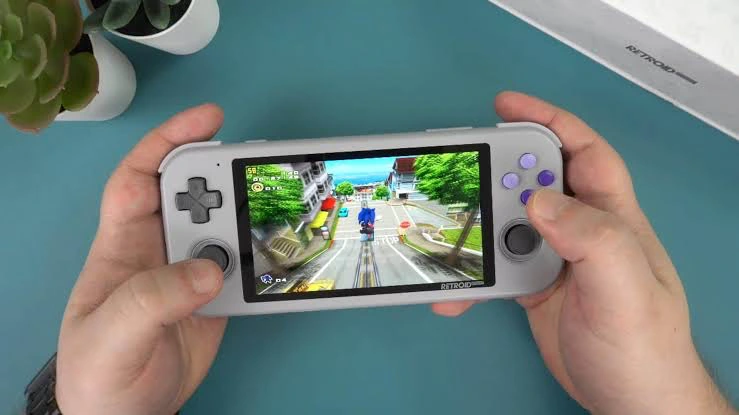
Can your smartphone finally deliver the definitive version of Sony’s legendary sim racer without melting your battery?
Engine decompilation translates original console instructions into native code for modern chipsets.
Consequently, modern hardware runs the title directly on bare metal without emulation overhead.
The Breakthrough Bringing Gran Turismo 3 to Android
Developer communities have pushed past traditional PlayStation 2 emulation limits with projects like GT3 Revisited.
Now, players can play Gran Turismo 3 on Android with native binary efficiency.
The release package lands as a compact APK weighing around 15.7 MB.
However, the application contains zero copyrighted game assets to keep distribution strictly legal.
Players supply an original Gran Turismo 3: A-Spec ISO rip from their own game library.
Once loaded, the engine accesses full simulation campaign modes, dealership menus, license tests, and split-screen multiplayer.
Furthermore, users can import and export memory card saves directly from legacy PS2 files.
Touchscreen overlays allow mobile controls, while Bluetooth controllers offer tactile input.
The build even supports advanced haptics on modern gamepads.
Native Engine Recompilation Versus Traditional PS2 Emulation
Conventional mobile emulation relies on real-time instruction translation via heavy apps like NetherSX2.
That translation layer creates massive CPU friction and drains mobile batteries within minutes.
In contrast, native source recompilation rebuilds game logic directly for ARM64 architectures.
Because instructions run natively, mid-tier chipsets render complex tracks like Deep Forest with locked frame pacing.
Thermal throttling drops significantly because processor cores skip heavy software translation layers.
Moreover, the renderer eliminates classic interlacing artifacts that plagued the original 640×448 display output.
Widescreen presentation renders extra track geometry rather than stretching pixel bounds.
Consequently, visual clarity eclipses even progressive scan modes seen in later sequels.
| Feature / Metric | Native Android Port (GT3 Revisited) | Traditional Emulation (NetherSX2 / AetherSX2) | Original PlayStation 2 Hardware |
|---|---|---|---|
| Execution Architecture | Native ARM64 Recompilation | Just-In-Time (JIT) Translation | Native MIPS Emotion Engine @ 294.9 MHz |
| Target Frame Rate | Native 60 FPS / High-Refresh | 30–60 FPS (Depends on SoC load) | Up to 60 FPS (Interlaced) |
| Native Display Output | Custom Resolutions (up to 4K & Beyond) | Internal Render Scale (1x–4x) | 640×448 NTSC / 640×512 PAL (Interlaced) |
| Base Package Footprint | ~15.7 MB APK (App Only) | ~25–50 MB App + BIOS Files | 4.7 GB DVD-ROM |
| Required Assets | User-Supplied GT3 Disc ISO | User-Supplied ISO + Console BIOS | Retail Physical Disc |
| Battery & Thermal Efficiency | High (Minimal CPU overhead) | Moderate to Low (Heavy thermal throttle) | N/A (AC Powered) |
| Input Methods | Touch Controls, Gamepads, Force Feedback | Touch Overlays, Standard Bluetooth Gamepads | DualShock 2, Logitech GT Force |
| Retail Software Price | $0 / Free (Open Source Engine) | $0 / Free (Software Core) | $49.99 (2001 MSRP) |
Community Modding and Expanded Mobile Features
Independent contributors have already unlocked network battle modes for up to 6 players without port forwarding.
These community patches also inject custom multi-sample anti-aliasing (MSAA) filters directly into mobile frames.
Races load almost instantaneously when pulled from rapid UFS mobile storage.
Meanwhile, virtual racers can customize on-screen touch buttons or map full telemetry to external racing wheels.
Market Impact and Future Outlook
Native recompilation is rapidly altering the retro gaming economy by bypassing corporate remasters entirely.
When enthusiasts reconstruct classic software natively, walled-garden subscription platforms lose their leverage over back-catalog game preservation.
My Perspective on This Port
Seeing Gran Turismo 3 flex its Polyphony Digital physics natively on modern phones feels surreal.
Purists might prefer the warm analog fuzz of a CRT monitor, yet progressive rendering and rock-solid 60 FPS speed deliver the definitive handheld driving rush.
If you own the original disc, installing this build is an absolute no-brainer for portable racing enthusiasts.
- K.K., Founder of TechKomo