Securing Apple’s first foldable hardware at retail is turning into an absolute nightmare as global inventory hits rock bottom ahead of launch day.
- Apple officially confirms extremely limited iPhone Duo in-store stock across flagship retail outlets worldwide.
- Walk-in purchases are blocked in select primary markets, forcing customers to secure advance digital reservations.
- Online storefronts in the US and India now enforce a strict two-unit order ceiling per individual customer.
- Ship dates have slipped up to 4 to 6 weeks following unprecedented opening pre-order volumes.
Will standing in line outside your local Apple Store on release morning actually land you a phone, or are walk-in shoppers chasing a ghost?
In retail terms, walk-in allocation represents physical inventory set aside specifically for customers queuing up without an advance online reservation. When manufacturers slash this specific allocation, retail shelves dry up immediately on launch morning.
The Global Scramble: Why Apple Slapped Hard Caps on Retail
Retail channels across key regions are actively tightening physical floor allocation before the official launch begins.
The rollout kicks off globally at 8:00 AM local time (5:00 AM PT / 8:00 AM ET / 12:00 PM GMT).
In major territories like Japan and South Korea, retail leadership took preemptive measures by eliminating unregistered physical queues entirely.
Shoppers in Tokyo and Seoul cannot walk into retail spaces to purchase hardware off the shelf on launch morning.
Instead, those locations require verified advance store pickup reservations scheduled strictly through digital channels.
Meanwhile, retail checkout systems in the US and India enforce a hard limit of 2 units per customer.
Automated cart restrictions immediately halt any online transaction attempting to order a third device.
Industry supply chain trackers indicate that total initial manufacturing yield for this year sits between 6 million and 10 million units.
Consequently, early pre-orders rapidly exhausted warehouse inventory, pushing custom configuration deliveries deep into late November.
Cutting-Edge Engineering Meets Tight Fabrication Bottlenecks
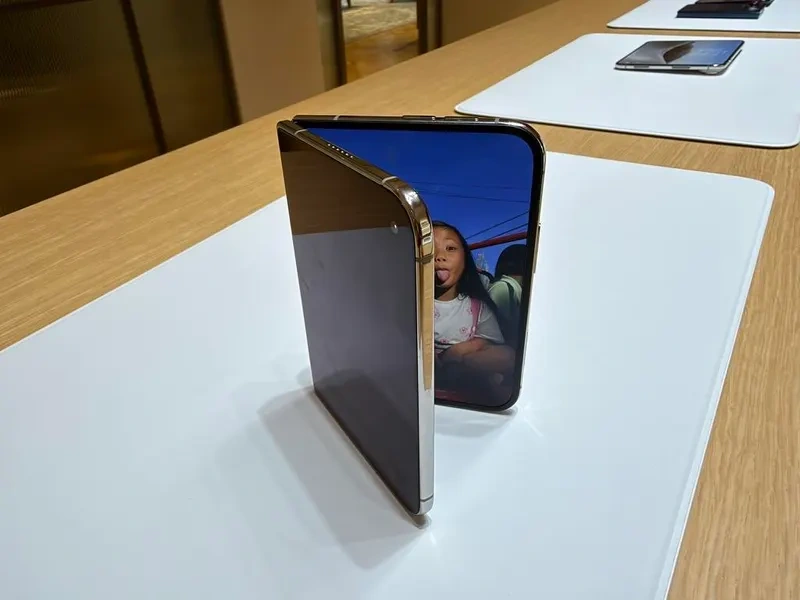
Fabricating this dual-screen chassis presents severe assembly tolerance challenges that naturally restrict early production output.
The device incorporates a 5.4-inch outer cover screen paired with an unfolding 7.6-inch Super Retina XDR inner display.
Furthermore, both panels achieve an intense 3,000 nits peak brightness alongside smooth 120Hz ProMotion variable refresh rates.
Under the hood sits Apple’s next-generation A20 Pro processor, paired with custom vapor chamber cooling channels.
To maintain power parity across both screens, engineers introduced an architecture-first dual-battery system supporting up to 44 hours of video playback.
The entire exterior utilizes a custom titanium chassis with an integrated hinge cover weighing in at approximately 245g / 8.64 oz.
Camera hardware relies on a 48MP Dual Fusion primary sensor alongside an updated 48MP ultra-wide lens.
Prices start at $1,999 USD (€2,199 / £1,899 / ₹2,99,900) for the base 256GB tier and scale aggressively up to 2TB.
| Specification | Official Metric / Component |
|---|---|
| Processor | Apple A20 Pro (6-core CPU, 7-core GPU, Dual 16-core NPU) |
| Inner Display | 7.6-inch Super Retina XDR OLED, 120Hz ProMotion, Nano-Texture Option |
| Outer Display | 5.4-inch Super Retina XDR OLED, 120Hz ProMotion, Ceramic Shield |
| Peak Brightness | 3,000 nits |
| Battery Life | Dual-cell pack (Up to 44 hours outer / 31 hours inner video playback) |
| Rear Cameras | 48MP Fusion Wide (f/1.6, Sensor-shift OIS) + 48MP Fusion Ultra-Wide |
| Chassis Build | Grade 5 Titanium frame with integrated protective hinge cover |
| Weight | 245g / 8.64 oz |
| Base Price | $1,999 USD (€2,199 / £1,899 / ₹2,99,900 INR) |
Managing Grey-Market Scalpers and Yield Realities
Supply chain insiders indicate that ultra-thin folding glass yields remain the single most volatile link in ongoing production.
Because precision hinges and folding OLED substrates carry notoriously strict quality tolerances, defective runs cannot simply be accelerated.
Simultaneously, retail purchase caps serve a dual purpose by aggressively shutting down syndicated scalper rings.
High-profile hardware launches regularly attract reseller networks aiming to flip scarce early units at 50% to 100% markups.
By enforcing strict identity-linked two-device ceilings, Apple protects ordinary retail buyers from facing instantly cleared shelves.
Therefore, the combination of intricate industrial assembly and anti-scalping protocols creates this unavoidable launch-day shortage.
The broader mobile sector will feel this supply squeeze ripple across competitor boardrooms throughout the upcoming holiday quarter. By demonstrating that consumers are willing to wait over a month for an ultra-premium $2,000 folding device, Apple validates the high-end folding form factor while simultaneously draining luxury upgrade budgets away from Android rivals.
If you did not lock down a digital pre-order within the initial ten minutes of checkout going live, do not waste your Friday morning freezing on a downtown sidewalk. Paying nearly two grand for a first-generation hinge architecture demands patience anyway, and waiting out the early fabrication bottleneck gives real-world drop tests and hinge durability reports plenty of time to surface.
- K.K., Founder of TechKomo