Buyers dropping $1,999 on Apple’s first foldable are facing a massive ergonomic hurdle, but Cupertino has confirmed that a redesigned iPhone Duo Reachability feature will arrive via a software update later this year.
- Horizontal Shift: Apple is overhauling its traditional vertical pulldown gesture to slide UI elements horizontally toward your thumb on the ultra-wide foldable panel.
- Launch Gap: The device officially hits global retail shelves on October 23, 2026, shipping with iOS 27.1 without Reachability or Apple Pencil support on day one.
- Ergonomic Fix: The upcoming software update directly addresses ergonomic complaints regarding the wide outer cover display and massive inner canvas.
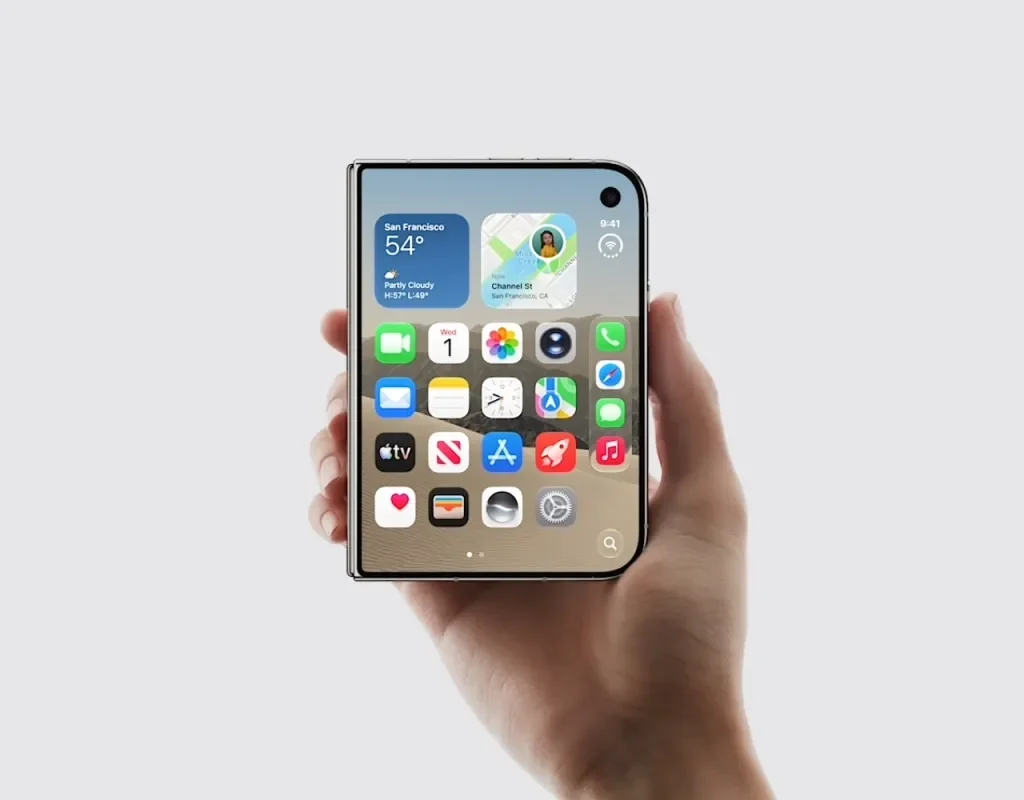
Will this delayed horizontal interface patch actually save one-handed usability, or did Apple rush its most ambitious hardware to market half-baked?
In smartphone interface design, Reachability represents an essential accessibility mode that temporarily shifts distant on-screen targets directly into thumb range.
On standard glass slabs, a swift downward swipe simply drops the top half of the screen downward.
However, the ultra-wide dimensions of a folding flagship turn side-to-side stretching into a persistent daily nuisance.
Solving the Foldable Ergonomic Nightmare
Early device testing revealed that navigating the foldable interface single-handedly presents genuine physical friction.
Industry sources confirm that the revised iPhone Duo Reachability feature will compress interface elements horizontally across the expansive panel.
Consequently, users with smaller hands can bring far-edge interactive buttons and navigation menus directly within lateral reach.
Historically, Apple introduced the original vertical implementation alongside the larger iPhone 6 back in 2014.
While pulling down vertical controls worked for tall aspect ratios, foldable screens present an entirely different geometric problem.
The unfolded inner canvas is nearly square, meaning edge-to-edge thumb travel causes significant muscle strain.
Moreover, the default interface heavily biases right-handed manipulation during regular daily workflows.
This impending update will allow users to tap or swipe to compress controls toward either side effortlessly.
Under the Hood: Apple Silicon and Display Power
Beneath the folding titanium chassis sits the custom vapor-cooled A20 Pro chip.
The silicon package delivers a 20% faster 6-core CPU and up to 50% more memory bandwidth compared to the outgoing A19 Pro.
Furthermore, the dedicated hardware includes a vastly enhanced Neural Engine pushing on-device Siri AI workloads.
Both OLED panels support adaptive 120Hz ProMotion and reach an outdoor peak brightness of 3000 nits.
The primary folding inner display provides an expansive workspace roughly 50% larger than the iPhone 18 Pro Max screen.
Meanwhile, the external cover screen delivers over 90% of the usable footprint of an iPhone 18 Pro.
Despite the cutting-edge hardware, early retail units ship without active USB-C Apple Pencil integration or lateral one-handed modes.
| Specification | Hardware & Feature Details |
|---|---|
| Processor | Apple A20 Pro (Vapor-Chamber Cooled, 6-core CPU, 7-core GPU) |
| Inner Display | Foldable OLED, 120Hz ProMotion, 3000 nits peak brightness |
| Outer Display | Cover OLED panel exceeding 90% of iPhone 18 Pro viewable area |
| Camera Setup | 48MP Dual Fusion primary camera array with Duo Preview |
| Battery Life | Dual-cell pack supporting up to 25 hours local video playback |
| Dimensions & Weight | Ultrathin titanium frame, approximately 238g / 8.39 oz |
| Software Launch | iOS 27.1 (Day-one base build) |
| Base Pricing | $1,999 USD / €2,199 / £1,899 |
Staggered Rollouts and Missing Features
Supply chain insiders indicate that software teams faced tight deadlines preparing iOS 27.1 for retail shelves.
As a result, several high-profile workflow features remain slated for incremental point releases throughout late 2026.
The delayed iPhone Duo Reachability feature will arrive alongside firmware enablement for the USB-C Apple Pencil.
Store shipments began landing across worldwide distribution hubs on October 21, 2026, ahead of the public sales kickoff.
Official retail sales begin globally on Friday, October 23, 2026, starting at 08:00 AM local time (05:00 AM PT / 08:00 AM ET / 12:00 PM GMT).
Initial production allocations sold out instantly, pushing backordered delivery estimates deep into early 2027.
The Bigger Picture
Apple entering the folding market immediately recalibrates global flagship expectations, placing intense heat on established book-style foldables from Samsung, Google, and OnePlus. By fundamentally reimagining core ergonomic utilities for wide aspect ratios rather than simply stretching standard smartphone software, Apple is establishing how tablet-class handsets should behave under single-handed thumb operation.
An Unfiltered Take on the Launch Polish
Shipping a two-thousand-dollar device with basic ergonomic software missing on day one is undeniably frustrating.
Re-engineering Reachability for horizontal movement is a brilliant move that the entire foldable category desperately needs.
Yet, asking early adopters who spent $1,999 to wait for post-launch updates just to hold their phone comfortably feels premature.
If you rely heavily on fast, single-handed text entry while commuting, holding off until this software patch drops is the smartest play.
- K.K., Founder of TechKomo