The official Apple Store iPhone Duo purchase limit just locked worldwide buyers out of carting more than two units, exposing severe production bottlenecks ahead of launch day.
- Shoppers worldwide can now check out a maximum of two units per customer across the official Apple Online Store and Apple Store app.
- Initial pre-orders opened on October 16, 2026, with ship dates slipping rapidly past December into early January 2027.
- The hardware starts at $1,999 / £1,899 / €2,199 (₹2,99,900) and scales up to $3,199 (₹4,49,900) for the 2TB configuration.
- Store retail pickup in select markets like Japan and South Korea now mandates strict advance reservations with zero walk-in availability.
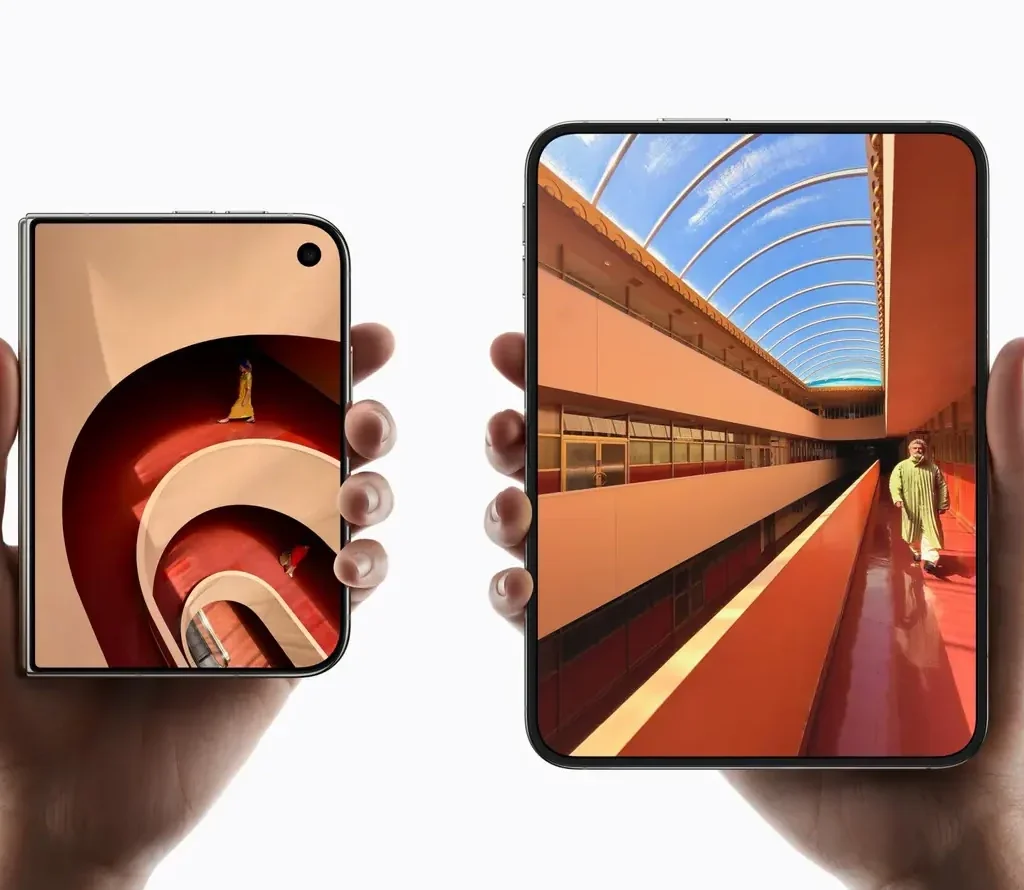
Will this aggressive anti-scalping intervention actually protect real buyers, or does it signal that Apple cannot manufacture foldable displays at scale?
In plain English, purchase caps stop automated bot syndicates and reseller scalpers from draining online warehouse allocations in seconds.
Consequently, everyday customers get an equitable chance to buy ultra-premium hardware without paying inflated black-market markups.
Cracking Down on Scalpers as Delivery Times Slip Into 2027
Attempting to add three units to your basket triggers an immediate popup warning.
The error banner states: “A maximum of 2 iPhone Duo can be purchased per customer. Please adjust the total quantity of iPhone Duo in your order before checking out.”
Early shoppers in the United States could briefly buy up to four devices during initial order opening.
However, Apple quietly clamped down as backend logistics systems flashed red.
The restriction applies universally across major launch territories, including the US, China, Singapore, Hong Kong, and India.
Furthermore, retail stores are actively bracing for severe launch-day inventory constraints on October 23, 2026 at 5:00 AM PT / 8:00 AM ET / 1:00 PM GMT.
Store team members have reportedly received instructions to discourage non-reservation walk-in shoppers due to virtually nonexistent walk-up stock.
In South Korea and Japan, physical store pickup requires prior reservations linked directly to verified local Apple IDs.
High Price and Tight Supply for Apple’s First Foldable
Hardware production yields on the complex hinge mechanism remain the primary operational choke point.
Supply chain insiders indicate that the titanium hinge integrates over 100 precision components, limiting initial fabrication yields.
The inner flexible panel measures 7.6 inches with an anti-glare nano-texture coating, paired with an external 5.4-inch screen.
Powering the device is Apple’s 3nm A20 Pro chip, supported by 12GB unified RAM and an integrated internal vapor chamber.
Even with the steep $1,999 baseline sticker, consumer demand wiped out launch allocations within minutes.
Selected pre-orders initially slated for late December have seen fulfillment windows adjusted forward to late November.
Yet, standard online checkout queues for custom configurations stretch well into early 2027.
| Specification | Hardware Detail |
|---|---|
| Processor | Apple A20 Pro (3nm node) with custom vapor cooling |
| Displays | 7.6-inch Foldable Inner OLED (120Hz ProMotion) + 5.4-inch Outer OLED |
| Memory & Storage | 12GB RAM; 256GB, 512GB, 1TB, and 2TB options |
| Battery & Charging | Dual-cell split battery system; MagSafe & fast wired charging |
| Weight & Thickness | 238g / 8.39 oz; thinnest profile folding frame |
| Chassis Build | Grade-5 Titanium frame, IP68 water resistance, Side-button Touch ID |
| Pricing (Global) | $1,999 / €2,199 / £1,899 (Base 256GB) up to $3,199 (2TB) |
| Pricing (India) | ₹2,99,900 (256GB) to ₹4,49,900 (2TB) |
| Launch Date | October 23, 2026 (Orders opened October 16, 2026) |
Foldable Market Repercussions and Brand Rivalry
By establishing a rigid Apple Store iPhone Duo purchase limit, Cupertino is shielding its brand prestige from uncontrolled reseller gouging.
This immediate sell-out narrative piles heavy psychological pressure onto legacy book-style foldable rivals like Samsung and Google.
Competitors have spent years refining production yields to maintain shelf-ready inventory.
Yet Apple managed to create instant consumer frenzy and supply scarcity despite entering the foldable arena at a massive $2,000 price barrier.
The Real Cost of Scarcity
Let us be completely candid about what is happening here.
A purchase limit sounds consumer-friendly on paper, but it also conveniently masks that Apple simply cannot produce enough foldable displays.
If you plan to spend upwards of $2,000 on first-generation folding hardware, waiting until early 2027 is actually a blessing in disguise.
Let early adopters iron out hinge durability and crease longevity before you hand over two months of mortgage payments.
- K.K., Founder of TechKomo