Google Pixel 9 owners just dodged an impending subscription fee because the company quietly extended its free Pixel 9 Satellite SOS feature for another full year.
- Google has officially extended its emergency satellite messaging service for the Pixel 9 series at $0 extra charge.
- The complimentary window now stretches to 3 years from device activation instead of the original 2-year cutoff.
- The off-grid protocol continues to rely on Skylo and Garmin Response to route distress messages in zero-cell zones.
- Emergency texts and location coordinates remain fully functional without active carrier signal or Wi-Fi.
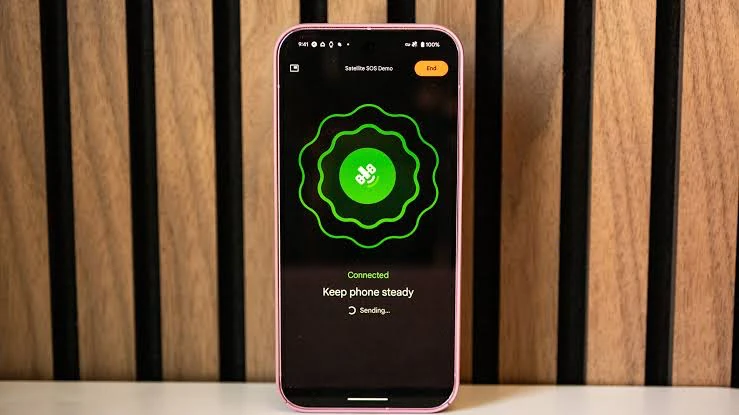
Will Big Tech ever muster the courage to put a literal price tag on human life, or has emergency satellite connectivity become permanently unmonetizable?
In plain terms, Satellite SOS uses specialized modem hardware inside the phone to ping orbital satellites directly.
Consequently, you can message emergency dispatchers when stranded miles away from the nearest cell tower.
The Silent Stay of Execution for Pixel 9 Satellite SOS
Mountain View confirmed the move following mounting inquiries regarding the looming expiration of the introductory tier.
When the hardware family debuted in August 2024, Google promised complimentary access for the first 24 months.
Now, every buyer gains a third year of coverage without paying a dime.
A company spokesperson verified that the complimentary tenure will carry into 2027 for original day-one adopters.
Notably, the update quietly rolled out across official documentation without fanfare.
This decision directly impacts the Pixel 9, Pixel 9 Pro, Pixel 9 Pro XL, and the Pixel 9 Pro Fold.
However, the entry-tier Pixel 9a remains excluded from satellite hardware entirely.
Following the Cupertino Playbook: Why Nobody Wants to Bill 911
This move mirrors Cupertino’s strategy with Emergency SOS via Satellite.
Apple introduced satellite emergency relays with the iPhone 14 in September 2022 under a two-year free trial.
Yet, Apple repeatedly pushed that deadline back to avoid public backlash.
Charging users a monthly fee to summon an ambulance creates an unprecedented PR nightmare.
Imagine an injured hiker discovering their emergency call is blocked by an expired credit card.
Neither Silicon Valley giant wants that headline in the global news cycle.
Furthermore, direct-to-cell constellations from SpaceX and AST SpaceMobile are rapidly expanding satellite capabilities.
Both giants recognize that basic SOS texting will soon be a commodity rather than a premium upsell.
| Feature Specification | Google Pixel 9 Series Integration |
|---|---|
| Primary Satellite Partner | Skylo Technologies (NTN Direct-to-Device) |
| Emergency Routing Center | Garmin Response Services |
| Complimentary Duration | 3 Years (Extended from 2 Years) |
| Hardware Modem | Samsung Exynos 5400 (3GPP Rel-17 NTN) |
| Primary Region Support | Contiguous US, Puerto Rico, Canada, Selected European Carriers |
| Base Hardware Pricing | $799 / €899 / £799 (Pixel 9 Base 128GB) |
| Supported Devices | Pixel 9, Pixel 9 Pro, Pixel 9 Pro XL, Pixel 9 Pro Fold |
| Default Messaging Hub | Google Messages (Required for Satellite Handshake) |
Technical Realities: How the Pixel 9 Handshake Works
Behind the scenes, the Pixel 9 Satellite SOS relies on non-terrestrial network protocols built directly into the modem.
The phone directs you on screen to rotate your body toward a passing satellite.
Once locked, an emergency questionnaire compresses into tiny data packets.
These packets transmit over L-band and S-band frequencies straight through the sky.
Your medical info, battery percentage, and precise GPS coordinates dispatch in seconds.
Local emergency teams then receive the dossier through Garmin’s ground relays.
Users can even configure the software to notify designated family contacts automatically.
The entire process requires no extra peripheral dongle or antenna accessory.
Nevertheless, weather conditions and dense foliage can still degrade the physical connection.
The Bigger Picture: The Emerging Space Race in Your Pocket
The broader mobile ecosystem is shifting toward ubiquitous space-based data networks.
Carriers like T-Mobile and Vodafone are already testing direct cellular messaging via orbital relays.
Meanwhile, Chinese OEMs have begun integrating satellite voice calling into flagship hardware.
By kicking the monetization can down the road, Google protects its hardware sales against aggressive flagship rivals.
Premium phones must now guarantee off-grid survival features straight out of the box.
The Unfiltered Opinion
Google made the only logical call here, because attempting to charge $5 or $10 a month for emergency pings would have failed instantly.
Consumers will happily pay recurring charges for cloud storage, AI tokens, and streaming music.
Yet, paying a monthly tax just to avoid dying in a ravine feels deeply exploitative to the average buyer.
Both Google and Apple know that direct-to-cell carrier features will soon make emergency SOS table stakes.
Enjoy the reprieve, because off-grid safety is quietly becoming a baseline consumer right rather than a luxury.
- K.K., Founder of TechKomo