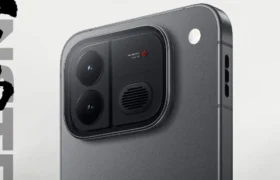
Regulatory databases worldwide are buzzing because the upcoming Poco X8s launch date appears set to disrupt mid-range smartphones across global markets.
- Global Regulatory Greenlight: The device just cleared Thailand’s NBTC and Singapore’s IMDA under model number 2609CPC5FG.
- Silicon-Carbon Endurance: Reports point to a massive 8,340mAh battery paired with 67W wired fast charging.
- Next-Gen Powerhouse: Geekbench benchmarks expose Qualcomm’s Snapdragon 7 Gen 4 processor alongside 12GB of RAM.
- Visual Dominance: Early documentation reveals a 6.83-inch 1.5K AMOLED display pushing a 120Hz refresh rate and 3,500 nits peak brightness.

Can this aggressively specced budget flagship completely erase the boundary between mid-tier value and genuine high-end endurance?
Simply put, a certification clearance means telecom regulators have officially tested and approved the device’s radio frequencies for commercial networks, indicating factory lines are fully prepped for retail release.
TechKomo Disclaimer: The details discussed below are based on early industry leaks, benchmark appearances, and regulatory filings. Official specifications, launch timelines, and regional pricing may vary upon the manufacturer’s final announcement.
Certification Clearinghouse Signals Imminent Arrival
Regulatory trackers discovered the model number 2609CPC5FG inside Thailand’s National Broadcasting and Telecommunications Commission database.
This follows an identical appearance in Singapore’s Infocomm Media Development Authority registry.
The prefix sequence indicates hardware initially scheduled for the final quarter of the fiscal cycle.
Historically, retail releases drop within two to four weeks once multiple international certification databases confirm identical model identifiers.
Supply chain insiders indicate that global launch timing is scheduled around 10:00 AM GMT (3:00 AM PT / 6:00 AM ET).
While Europe, Turkey, and Southeast Asia look poised for launch day distribution, availability in secondary markets remains subject to localized logistics.
Benchmarks Expose Raw Processing Muscle
Geekbench database records reveal single-core test scores reaching 972 points alongside a multi-core readout of 3,297.
These figures stem directly from Qualcomm’s Snapdragon 7 Gen 4 mobile platform.
The silicon features an integrated architecture balanced between extreme performance and strict thermal efficiency.
Benchmark sheets also identify a spacious 12GB RAM configuration running contemporary LPDDR4X or LPDDR5 memory pathways.
Internal flash storage options will range between 128GB and 256GB with modern UFS 3.1 speeds.
Furthermore, software test logs document Android 16 running underneath Xiaomi’s custom HyperOS interface.
Massive Battery Shifts The Industry Paradigm
Perhaps the most startling component in the regulatory documentation involves the phone’s power cell.
Engineers have integrated an 8,340mAh silicon-carbon battery into the chassis.
Silicon-carbon technology delivers significantly greater energy density without bloating overall thickness or increasing excessive weight.
Despite hosting this monolithic cell, the overall device weight clocks in at an easy-to-handle 223g / 7.86 oz.
Fast refueling runs through a 67W HyperCharge wired brick included in retail bundles.
Additionally, internal circuitry supports 22.5W reverse wired charging to recharge accessories like wireless earbuds on the go.
Dynamic Visuals And Optical Upgrades
The front frame houses a expansive 6.83-inch 1.5K AMOLED display featuring a crisp 2772 x 1280 pixel resolution.
Users can expect butter-smooth animations thanks to a native 120Hz refresh rate.
Outdoor usability will not suffer given the claimed 3,500 nits peak brightness rating.
Turning the device over reveals a streamlined camera array built around a capable 50MP main sensor enhanced with optical image stabilization.
Auxiliary lenses include a 2MP depth sensor alongside integrated software modes delivering sharp 2.5x in-sensor zoom portraits.
Selfie enthusiasts will utilize a centrally located punch-hole 16MP front camera for clean video calls.
| Component | Leaked Specifications |
|---|---|
| Processor | Qualcomm Snapdragon 7 Gen 4 (Octa-Core) |
| Display | 6.83-inch 1.5K (2772 x 1280) AMOLED, 120Hz, 3,500 nits |
| RAM & Storage | 8GB / 12GB RAM, 128GB / 256GB Storage |
| Rear Cameras | 50MP Main (OIS) + 2MP Depth (2.5x Crop Mode) |
| Front Camera | 16MP Center Punch-Hole |
| Battery & Charging | 8,340mAh Silicon-Carbon, 67W Fast Charging, 22.5W Reverse |
| Software | HyperOS based on Android 16 |
| Estimated Global Price | $279 – $329 (€259 – €305 / £219 – £259) |
The Bigger Picture
This sudden influx of regulatory approvals lands at a volatile moment for rival mid-tier smartphone manufacturers.
By packaging an enormous silicon-carbon battery with an upper-mid Qualcomm platform, competitors like Samsung, Realme, and Motorola will struggle to justify comparable $300 price points.
Consumers have grown weary of marginal cosmetic updates, forcing mid-range brands to deliver monumental battery and display enhancements to stay relevant.
Unfiltered Opinion
Let us be completely candid about how hardware lines actually survive today.
Most shoppers do not need four-figure ultra-flagships that overheat while loading basic web pages and scrolling social feeds.
If retail variants nail this leaked $279 entry price, an 8,340mAh battery will instantly turn this package into a ruthless battery marathon champion.
However, ditching dedicated ultrawide cameras for a decorative depth lens continues to be a frustrating cost-cutting compromise.
Still, if battery anxiety haunts your daily commute, this phone easily warrants an immediate spot on your upgrade watchlist once official sales open.
- K.K., Founder of TechKomo