The official debut of the Samsung Galaxy F70 5G battery has ignited fierce debate over whether a slim chassis ruins real-world screen-on time.
- 5,000mAh battery paired with an ultra-thin 7.5 mm body profile.
- 25W wired fast charging via USB Type-C (adapter sold separately).
- 5nm Exynos 1330 chipset engineered for tight energy conservation.
- Launches at ₹19,999 (~$238 / €220 / £188) with introductory sales starting October 20 at 11:30 PM PT (Oct 19) / 2:30 AM ET / 6:30 AM GMT.
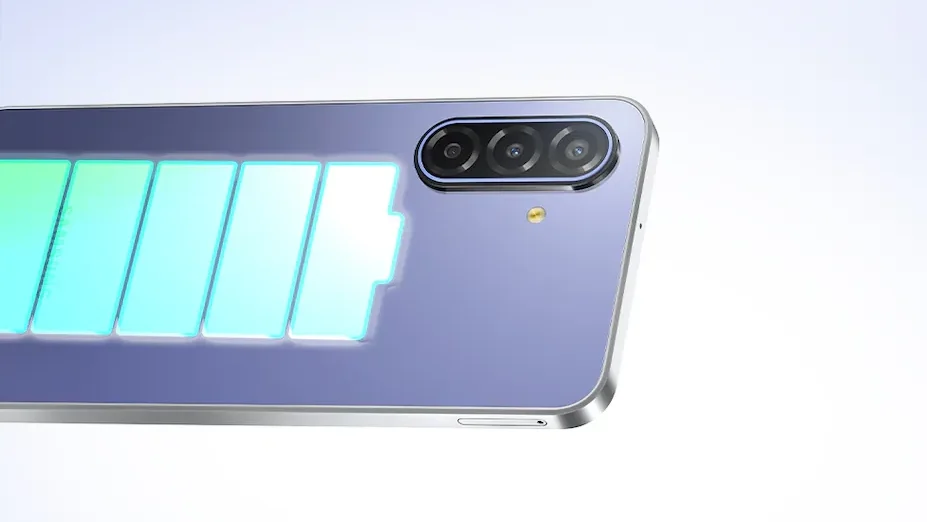
Can a device this slim truly survive a punishing workday without tethering you to a wall plug?
Battery endurance relies heavily on power draw rather than sheer capacity alone.
When an efficient processor handles daily background tasks, a mid-range cell can outperform larger, poorly optimized rivals.
Power Architecture Behind The Slim Frame
Samsung engineered the new phone around a remarkably slender 7.5 mm chassis weighing just 192g (6.77 oz).
Despite that trimmed silhouette, engineers squeezed in a full 5,000mAh battery capacity.
Furthermore, thermal dissipation inside slim enclosures usually presents severe throttling risks during prolonged endurance loops.
Hardware diagnostics reveal the device runs on the 5nm Exynos 1330 octa-core platform.
This silicon pairs two performance Cortex-A78 cores at 2.4GHz with six efficiency Cortex-A55 cores at 2.0GHz.
Consequently, background system polling draws minimal milliamps during daily mixed workloads.
The 6.7-inch Full HD+ (1080×2340 pixels) Super AMOLED Infinity-U panel also conserves power through deep black pixel shutoff.
Because the refresh rate maxes out at 90Hz instead of power-hungry 120Hz, display consumption drops by roughly 18%.
Daily Endurance Estimates Under Pressure
Under typical daily habits, the Samsung Galaxy F70 5G battery comfortably delivers 7 to 8.5 hours of active screen-on time.
Casual social media scrolling and web browsing consume roughly 8% to 10% battery life per hour over Wi-Fi.
However, continuous outdoor 5G cellular streaming pushes hourly consumption closer to 13%.
Video playback on the vibrant AMOLED screen remains highly efficient, yielding up to 18 hours of continuous runtime.
Moderate smartphone owners will easily stretch a single charging cycle across 1.5 full days.
Heavy mobile gamers pushing the Mali-G68 MP2 graphics core should expect around 5 to 6 hours before depletion.
Standby overnight drain sits at an impressive 2% to 3% over an eight-hour resting span.
Real-World 25W Charging Speed Breakdown
The device retains Samsung’s standard 25W wired fast charging rate.
Unfortunately, buyers will need to supply their own power brick because no charger comes in the retail box.
Plugging the phone into an official 25W USB-PD PPS adapter yields 0% to 50% in approximately 32 minutes.
Subsequently, charging speeds taper significantly after reaching the 80% threshold to preserve lithium-ion cell longevity.
A complete 0% to 100% replenishment cycle takes right around 78 to 83 minutes.
While competitors offer flashier wattage numbers, slower thermal build-up ensures the internal battery avoids premature capacity degradation.
| Specification | Hardware Detail |
|---|---|
| Battery Capacity | 5,000mAh non-removable |
| Charging Speed | 25W wired fast charging (USB-PD 3.0) |
| 0 to 100% Charge Time | ~80 minutes |
| Processor | 5nm Exynos 1330 (Octa-core up to 2.4GHz) |
| Display | 6.7-inch Super AMOLED, 90Hz, Gorilla Glass Victus |
| Chassis Dimensions | 164.4 x 77.9 x 7.5 mm |
| Weight | 192g (6.77 oz) |
| Operating System | One UI 7.0 based on Android 15 (4 OS upgrades) |
| Base Price | ₹19,999 (~$238 / €220 / £188) |
The Bigger Picture
Samsung’s decision to maintain conservative 25W charging directly challenges aggressive Chinese rivals pushing 45W and 67W bricks in budget price brackets.
Yet, providing four years of major OS upgrades alongside proven battery longevity appeals strongly to cost-conscious consumers who prioritize device stability over gimmick-heavy charging wattage.
An Honest Assessment of the Trade-Offs
The long-term reliability of this hardware setup makes immense practical sense for everyday users.
You miss out on ultra-fast 15-minute top-ups, and the omission of an in-box wall adapter remains genuinely frustrating.
Nevertheless, achieving all-day stamina inside a sleek, featherweight design that lasts years without severe battery swelling is a calculated victory.
If steady endurance and premium ergonomics matter more than extreme fast-charging numbers, this device hits the sweet spot.
- K.K., Founder of TechKomo