Surging demand for wider aspect ratio devices will cause foldable display shipments to increase 44% this year as consumers abandon awkward tall screens.
- Global foldable OLED panel shipments will expand by 44% year-over-year to hit 29 million units.
- Dedicated wide-screen panels will command 44% of all foldable display shipments before crossing 60%.
- Display manufacturing dominance is heavily consolidating, leaving one South Korean giant with 66% global market share.
- Premium LTPO flexible backplane adoption is effectively replacing older LTPS panels across all flagship tiers.
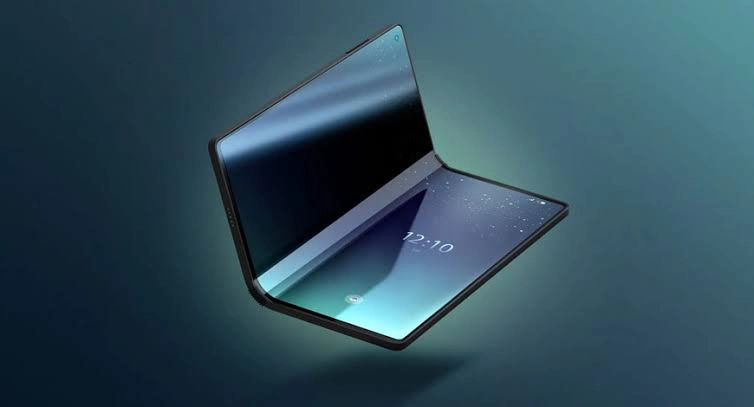
Can conventional clamshell flip phones survive now that mainstream buyers demand tablet-grade productivity in a pocketable ratio?
A wide-screen foldable fundamentally swaps out the narrow, remote-control cover display for a standard smartphone aspect ratio that opens up into an expansive canvas.
Consequently, users get an uncompromised typing experience on the outside without sacrificing internal multitasking space.
Why The Narrow Foldable Era Is Collapsing
Smartphone buyers have spent half a decade complaining about cramped exterior cover screens on early book-style foldables.
For years, typing on an ultra-tall, narrow front panel felt like balancing on a tightrope.
Industry intelligence from Omdia confirms that hardware brands finally listened to consumer pushback.
Display shipments specifically engineered for wide-format foldables will capture 44% of all foldable panel shipments this cycle.
Furthermore, analysts project this specific layout will capture over 60% market share within the next twelve months.
This aggressive transformation marks a decisive departure from the tall, narrow aspect ratios popularized by earlier generations.
Meanwhile, traditional clamshell flip devices are losing ground as high-end consumers demand raw multitasking power rather than pocketable nostalgia.
Market Shakeup: The 29 Million Unit Surge
Total flexible display panel deliveries are projected to climb to 29 million units, marking a dramatic 44% annual expansion.
Supply chain tracking reveals that premium hardware rollouts are driving this unprecedented manufacturing surge.
Crucially, Samsung Display has secured exclusive panel supply orders for both the Galaxy Z Fold8 and the Apple iPhone Duo.
As a direct result of these dual manufacturing contracts, Samsung Display is forecast to control a staggering 66% of the entire global foldable panel market.
Conversely, rival Chinese display manufacturers—including BOE, China Star, Tianma, and Visionox—are bracing for contracting market shares.
Domestic Chinese smartphone brands experienced sluggish demand for older foldable formats, forcing suppliers to pivot rapidly toward wider glass tooling.
Nevertheless, Chinese OEMs are expected to aggressively adopt wide-screen panels next season to reclaim premium shelf space.
The Technical Leap: LTPO Takes Complete Control
Behind the outward geometric shift lies a quiet, expensive revolution in panel backplane physics.
Display foundries are constructing nearly all flagship foldable screens using flexible Low-Temperature Polycrystalline Oxide (LTPO) technology.
Older Low-Temperature Polycrystalline Silicon (LTPS) substrates simply consume too much energy when driving expansive inner displays.
LTPO enables instantaneous dynamic refresh scaling between 1Hz and 120Hz, preserving critical battery reserves.
Because flagship foldables routinely retail above $1,600 / €1,490 / £1,280, manufacturers are opting for the finest display materials available.
| Specification / Market Metric | Industry Data & Projected Forecast |
|---|---|
| Total Global Panel Shipments | 29 Million Units (Up 44% YoY) |
| Wide Form-Factor Market Share | 44% in 2026, Projected >60% in 2027 |
| Leading Display Supplier | Samsung Display (66% Market Share) |
| Dominant Backplane Tech | LTPO flexible AMOLED (Dynamic 1Hz–120Hz) |
| Primary Driver Devices | Samsung Galaxy Z Fold8 & Apple iPhone Duo |
| Competing Panel Fabricators | BOE, CSOT (China Star), Tianma, Visionox |
| Hardware Weight Average | 215g – 238g (7.58 oz – 8.39 oz) |
| Average Device Selling Price | $1,485 – $1,999 (€1,380 – €1,860 / £1,190 – £1,600) |
The Global Power Shift
This sharp pivot toward wide-aspect glass exposes a massive strategic realignment across Silicon Valley and Asia.
Huawei originally proved that wider passport-style proportions resonated with business professionals who hated narrow outer screens.
However, Western tech giants refused to commit until manufacturing yields on wide, ultra-thin glass reached strict durability tolerances.
Now that the supply chain has matured, Apple and Samsung are setting an aggressive standard that forces everyone else to play catch-up.
Component makers who failed to retool their fabrication lines for wider glass blanks will face devastating inventory write-downs.
An Honest Assessment
For five straight years, buying a book-style foldable felt like accepting a frustrating daily ergonomic compromise.
You were forced to either squeeze your thumbs onto a narrow front screen or use two hands to unfold an internal display that still showed black bars around widescreen video.
The transition toward wide aspect ratios finally corrects this glaring hardware misstep.
It transforms foldables from an awkward niche toy into a legitimate dual-purpose computing tool that does not punish you for keeping it closed.
Samsung Display walking away with two-thirds of the worldwide panel pipeline proves that hardware excellence still beats price-undercutting rivals.
If you have held off on upgrading your phone, this year’s wide-screen generation is the first lineup truly worth your money.
- K.K., Founder of TechKomo