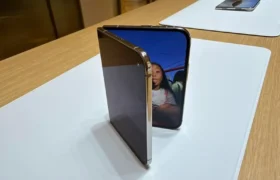
The newly leaked Motorola Razr Flex Geekbench benchmark just shocked the mobile tech sphere by ditching expected flagship silicon.
- Unexpected Engine: Prototype testing reveals Qualcomm’s Snapdragon 8 Gen 5 instead of the anticipated Snapdragon 8 Elite Gen 5.
- Raw Benchmark Power: The device pulled a single-core score of 2,669 and a multi-core mark of 8,837 on Geekbench 6.
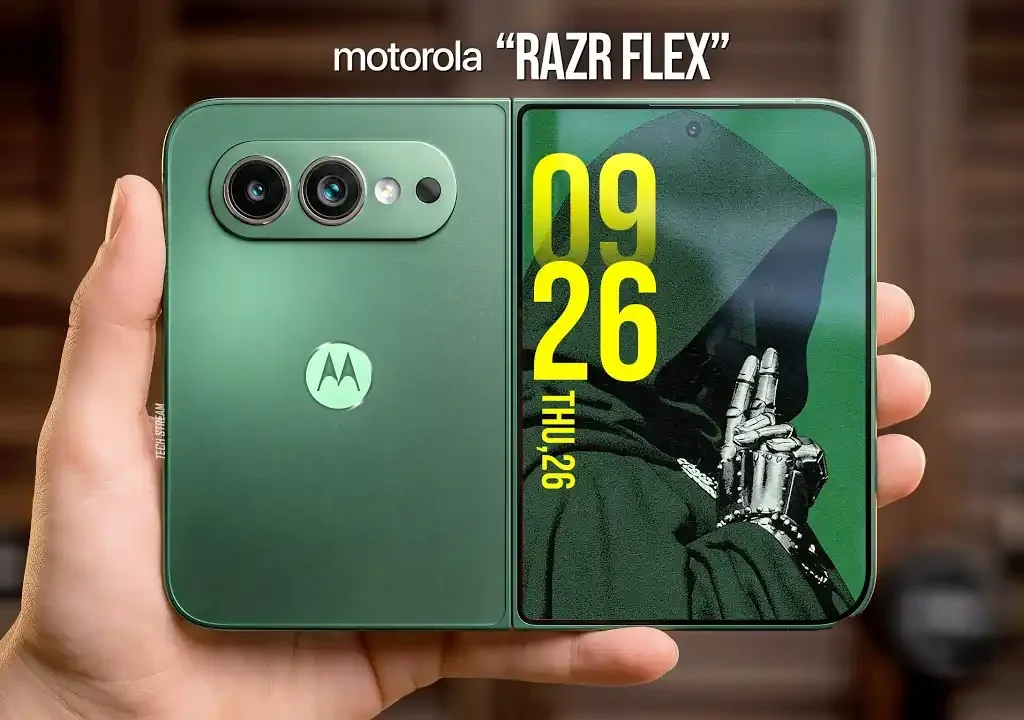
- Wide Aspect Ratio: Early builds pack a 6.92-inch inner folding OLED screen alongside a massive 4.97-inch exterior cover display.
- Target Launch Window: Industry tracking points to an official worldwide rollout in mid-December 2026.
TechKomo Disclaimer: The details discussed below are based on early industry leaks and benchmark database findings. Official specifications, performance tunings, and commercial pricing may vary upon retail debut.
Can Motorola actually convince buyers to choose a wide-fold format with last-minute processor compromises?
Benchmark databases like Geekbench measure raw processor compute performance by pushing silicon through simulated heavy-duty workloads.
These numbers give enthusiasts an unvarnished preview of how smoothly high-demand operating software will run on prototype devices.
What The Motorola Razr Flex Geekbench Reveal Actually Uncovered
Fresh regulatory and testing records show the prototype carrying the official Razr Flex 2027 moniker.
Consequently, the configuration confirms a roomy 12GB of RAM paired directly with stock Android 17.
Earlier whispers across supply channels pointed straight to the Snapdragon 8 Elite Gen 5.
However, the verified motherboard identifiers register a standard Snapdragon 8 Gen 5 SoC instead.
The prototype produced 2,669 points in single-core compute and 8,837 points in multi-core metrics.
Therefore, thermal management seems strictly prioritized to ensure the ultra-thin folding chassis avoids aggressive throttling.
Form Factor Shift: A Wide Horizon Display
Engineers clearly designed this chassis to challenge traditional tall, narrow folding form factors.
The primary interior folding panel spans 6.92 inches at a sharp resolution of 2364 x 1728 pixels.
Furthermore, gamers and power multitaskers gain a buttery-smooth 165Hz refresh rate.
On the outside, users interact with a generous 4.97-inch OLED cover screen featuring a crisp 1140 x 1736 resolution.
This broad exterior layout allows complete app navigation without unfolding the hinge every five minutes.
Despite housing complex dual-hinge mechanisms, the complete build weighs in at just 215g / 7.58 oz.
Camera Hardware, Battery Cells, And Real-World Endurance
Powering this broad display assembly is a surprisingly substantial 5,000mAh dual-cell battery.
Additionally, wireless users benefit from convenient 25W Qi2 wireless charging support.
Imaging duties rely on an optically stabilized 50MP primary camera paired with a secondary 50MP ultrawide sensor.
Meanwhile, video callers receive two independent 32MP front selfie cameras placed across both screen orientations.
Official retail packaging is slated to offer curated Pantone Coriander and Pantone Dark Botanical Garden shades.
| Component | Leaked Motorola Razr Flex Prototype Specifications |
|---|---|
| Processor | Qualcomm Snapdragon 8 Gen 5 (Octa-Core) |
| RAM & Storage | 12GB LPDDR5X RAM / 256GB UFS 4.0 |
| Inner Display | 6.92-inch Foldable OLED, 2364 x 1728, 165Hz |
| Cover Display | 4.97-inch OLED, 1140 x 1736, 120Hz |
| Rear Cameras | 50MP Main (OIS) + 50MP Ultrawide |
| Selfie Cameras | Dual 32MP (Inner and Outer Displays) |
| Battery & Charging | 5,000mAh Battery with 25W Wireless Charging |
| Weight & Build | 215g / 7.58 oz, IP48/IP49 Water Resistance |
| Operating System | Android 17 |
| Expected Price | Est. $1,199 / €1,099 / £949 |
Launch Schedules And Global Availability
Supply chain trackers anticipate an official keynote reveal by mid-December 2026.
Global launch presentations are expected to kick off simultaneously at 07:00 AM PT, 10:00 AM ET, and 15:00 GMT.
International market pricing will target a competitive $1,199 USD, translating to roughly €1,099 EUR and £949 GBP.
The Bigger Picture
This sudden move puts immediate structural pressure on competitors like Samsung and Google.
By deploying a wider aspect ratio, Motorola directly fixes the frustratingly narrow cover displays found on standard book-style foldables.
Using the balanced Snapdragon 8 Gen 5 also creates financial room to undercut rival prices by several hundred dollars.
Unfiltered Opinion
Skeptics will immediately whine about the lack of the extreme “Elite” silicon branding.
Yet, real-world foldable longevity has never been bottlenecked by raw synthetic crunching power.
Instead, folding phones routinely stumble over atrocious battery life, overheating frames, and uncomfortable cramped front covers.
If Motorola ships a 5,000mAh wide-screen foldable at 215 grams with zero thermal throttling, count me impressed.
Pragmatic silicon choices beat scorched thighs and dead batteries every single day of the week.
- K.K., Founder of TechKomo