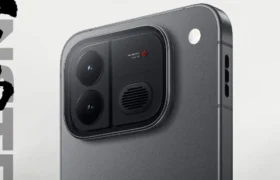
Finding a reliable smartphone shooter under $240 usually feels impossible, but this Samsung Galaxy F70 5G camera review exposes what happens when budget hardware meets flagship optical stabilization.
- 50MP primary sensor with hardware OIS anchors the triple rear array.
- Dedicated 13MP selfie shooter replaces the low-res sensors common in entry-tier phones.
- Aggressive pixel-binning yields punchy daylight shots despite modest auxiliary lenses.
- Starts at $240 / €220 / £185 (₹19,999) in India, targeting high-volume retail.

Can an entry-level mid-ranger truly produce social-ready images without crushing dynamic range?
Optical Image Stabilization (OIS) uses physical gyroscopic motors to counter hand tremors, preventing blurry frames.
Pixel binning then merges clusters of four tiny pixels into one large super-pixel to pull clean light data indoors.
Daylight Precision on the Primary 50MP Lens
In bright daylight, the 50MP (f/1.8) main camera captures crisp frames with signature Samsung warmth.
Default shots output at 12.5MP using four-to-one pixel binning.
Consequently, shutter response feels snappy outdoors with zero shutter lag.
Fine foliage textures and architectural edges retain distinct clarity across high-contrast daylight scenes.
However, shadows can sometimes appear lifted too aggressively by the automated multi-frame HDR processing.
Greens and blues exhibit slight saturation boosts, ensuring pictures pop immediately on mobile social feeds.
The hardware OIS module keeps handheld shots sharp even when walking or tracking moving subjects.
Ultrawide and Macro Realities: The Auxiliary Trade-Off
Beside the main lens sits a 5MP (f/2.2) ultrawide camera alongside a 2MP macro unit.
While the ultrawide camera captures sweeping group frames, corner softness remains noticeable.
In addition, dynamic range narrows considerably when switching from the main shooter to the 5MP wide angle.
The tiny 2MP macro fixed-focus sensor requires intense ambient light to produce usable close-ups.
Therefore, serious shooters will rely almost exclusively on the stabilized 50MP primary sensor for everyday framing.
Digital 2x crop zoom pulled from the native 50MP canvas easily outperforms the auxiliary lenses in usable detail.
Low-Light and Night Photography Tested
Night photography represents the ultimate stress test for any budget image sensor.
Thanks to dedicated hardware stabilization, the shutter stays open longer without introducing hand blur.
Streetlights remain well-controlled without massive blown-out glare halos around light fixtures.
Moreover, the built-in Night Mode exposures take roughly 2 to 3 seconds to finish processing.
Dark skies exhibit modest chroma grain, but noise-reduction algorithms avoid smudging skin textures into oil paintings.
Still, shooting without Night Mode engaged yields underexposed frames with muted color saturation.
Keeping Night Mode set to automatic ensures the best exposure balance after sunset.
Front 13MP Camera: Portrait Edge Detection and Selfies
Selfie duty relies on a front-facing 13MP sensor nestled inside the infinity display notch.
Facial tones remain natural, steering clear of artificial skin-smoothing filters by default.
Furthermore, software portrait mode maps subject boundaries cleanly around stray hair and spectacles.
Background blur renders smooth bokeh rolloff, simulating a fast prime lens rather convincingly.
Under dim indoor restaurant lights, the selfie camera does trade away fine micro-contrast for brightness.
Yet video calls and quick social snaps turn out consistently sharper than competing budget phones.
Both front and rear setups support 1080p video recording at 30fps, retaining stable framing during casual pans.
Complete Device Specifications
| Specification | Hardware Detail |
|---|---|
| Main Rear Camera | 50MP, f/1.8, PDAF, Hardware OIS |
| Ultrawide Camera | 5MP, f/2.2, Fixed Focus |
| Macro Camera | 2MP, f/2.4 |
| Front Camera | 13MP, f/2.0, HDR |
| Processor | Samsung Exynos 1330 (5nm, Octa-Core up to 2.4GHz) |
| Display | 6.7-inch Full HD+ Super AMOLED, 90Hz Refresh Rate |
| Battery & Charging | 5,000mAh, 25W Fast Charging |
| Dimensions & Weight | 7.5mm thickness, 192g / 6.77 oz |
| Durability | IP54 Dust/Splash Resistance, Gorilla Glass |
| Base Price | $240 / €220 / £185 (₹19,999 regular / ₹17,999 promo) |
The Bigger Picture
With the global entry-level smartphone market tightening around component costs, camera compromises usually hit hardest.
By putting hardware OIS onto a $240 device, Samsung forces rival Chinese brands to reconsider their secondary sensor marketing.
This move ensures that casual buyers no longer need to spend flagship money just to get stabilized family photos.
Real-World Take: Worth Your Money?
Let us cut straight through the marketing noise regarding this Samsung Galaxy F70 5G camera review.
The auxiliary 5MP and 2MP sensors exist primarily to check spec-sheet marketing boxes.
However, the primary stabilized 50MP lens delivers genuine value that punches above its price bracket.
If you demand reliable point-and-shoot stability without spending flagship wages, this camera package handles daily shooting admirably.
Just treat this phone as a single-lens powerhouse with an ultra-wide safety net.
- K.K., Founder of TechKomo